Benefits of Team Building and How to Get Them
Someone has asked you to organise team building, or to justify it. The benefits of team building are real but conditional. A good session makes stronger relationships, better communication and higher morale more likely. A badly judged day can do the opposite.
This guide covers the main benefits, the activity types that tend to produce each one, and the disadvantages worth planning around. We have left out headline percentages we can’t stand behind. A large meta-analysis, Klein et al. (2009) in Small Group Research, found a positive effect overall, strongest on how teams feel and work together.
What team building is (and is not)
Team building is any planned activity that gets colleagues working together on a shared task so they get to know each other and work better afterwards. It is not just a party, and it is not a trust fall.
A social with a drink in hand is fun, but the benefit comes when people have to solve something together. That could be a puzzle, a challenge or a game with a result. The task gives people a reason to talk to someone outside their usual circle.
The main benefits of team building
The benefits below are what a well-run session makes more likely. They are tendencies, not guarantees, and they fade without follow-up.
Better communication across teams
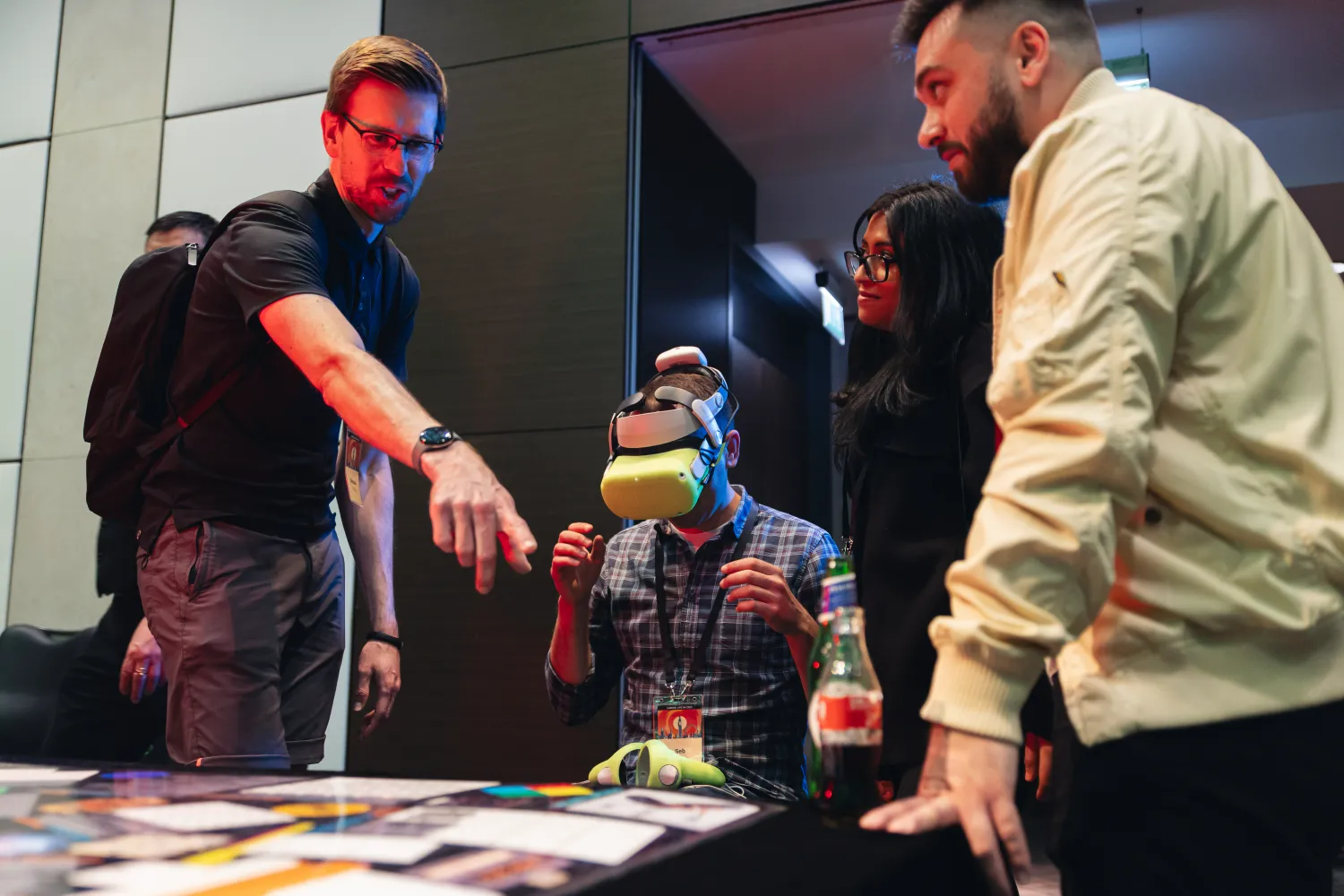
A shared task forces people to explain, ask and listen. Mixing people from different departments is where this shows most, because colleagues who only ever exchange emails get to talk face to face. Formats where players are split between the virtual and real world, such as an escape room team building game, make communication the whole point.
Trust and working relationships
Trust grows when people see each other under light pressure and in a different setting. This matters most for new teams, remote or hybrid teams who rarely share a room, and groups that have just been merged. A first-name chat over a puzzle often does more than a formal introduction round.
Morale and engagement
People tend to enjoy work more when they like the people around them. A good shared experience gives a team a story to tell, and in-jokes carry back to the office. That helps the atmosphere, though it won’t fix pay, workload or poor management.
Problem-solving and collaboration under light pressure
Time-limited challenges show how a team splits tasks, who takes charge and what happens when the first plan fails. Teams can then discuss it afterwards without any real stakes. It is practice for working together, not a test of who is best.
Leadership and confidence
Quieter people can step up in a game format, because the rules are clear and the stakes are low. A person who rarely speaks in meetings may turn out to be the one who solves the clue. Managers can also see strengths they hadn’t noticed.
Retention and culture
Feeling connected to colleagues can make people more likely to stay, and team building can contribute to that. We would not promise a retention figure. If you need one for a business case, cite original research such as CIPD or Gallup directly, and treat any quoted percentage with care.
Which activity types deliver which benefit
Different formats suit different goals. This table maps the main benefits to formats we run, with the group sizes given on each experience page.
| Benefit you want | Format that helps | Group size |
|---|---|---|
| Communication across teams | VR Escape Room: players split between the virtual and real world, teams of 4 to 10 | Up to 500 participants |
| Collaboration and problem-solving | AI Robot Wars: teams of 6 to 12 | Up to 500 participants |
| Getting to know each other | Indoor team building such as CSI Investigation, Paint Pad Pro or Escape Room in a Box | From 10 to 100+ |
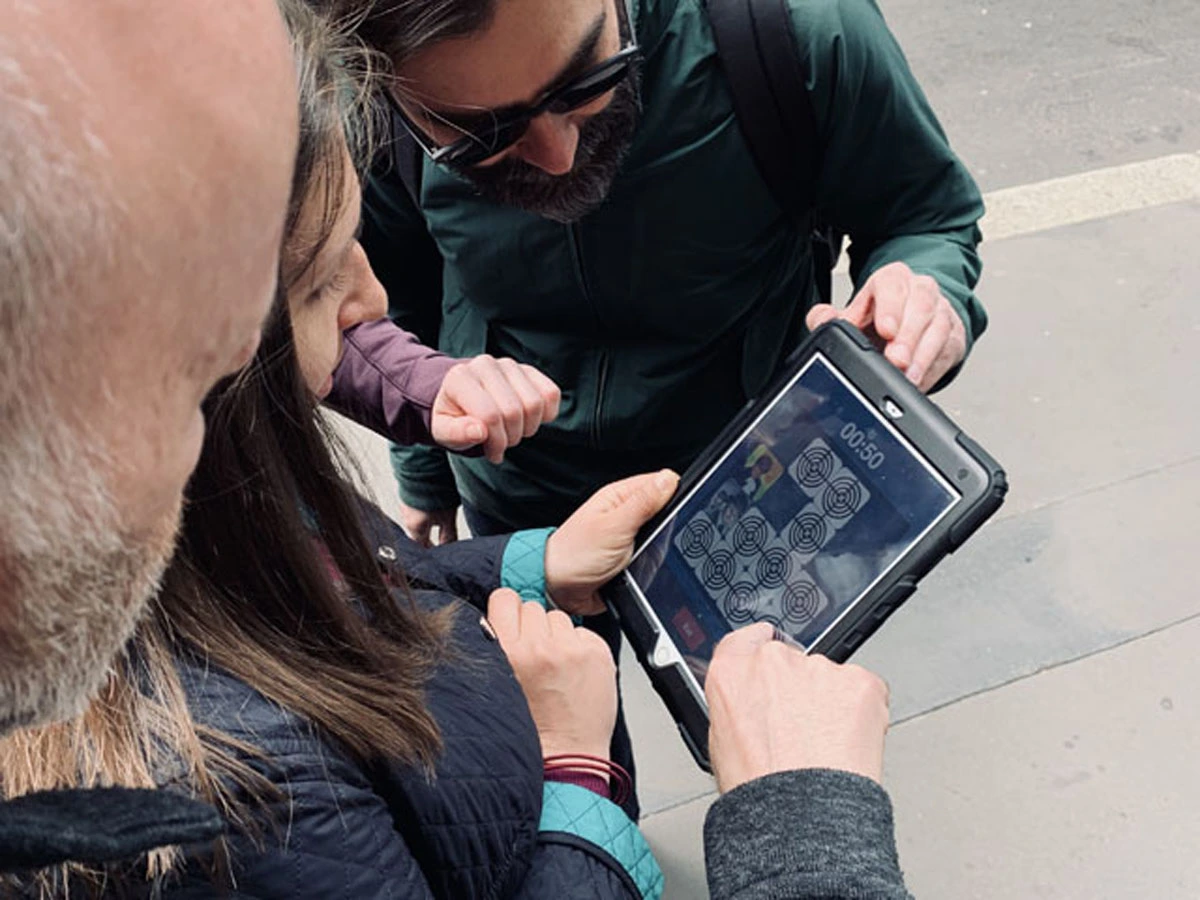
| Fresh air and light competition | Outdoor team building and tablet treasure hunts with geotagged challenges | Varies by format |
| Morale and a big shared laugh | Game shows and quizzes, including Taskmaster-style challenges | Suits post-conference or end-of-day socials |
| Trust, bluffing and discussion | The Betrayers, inspired by The Traitors, adapted from boardroom to conference hall | Adapted to the space and group size |
AI Robot Wars needs no AI, robotics, coding or VR experience, and the VR Escape Room needs no VR experience either. That matters for a mixed-ability group, because nobody starts with an advantage.

The disadvantages, and why some team building fails
Team building fails when it is forced, unfocused or forgotten the next day. These are the common problems, and each can be planned out.
- Forced participation. Staff who feel they must join in, or who dread physical or public tasks, come away worse off. Make entry optional where you can and offer roles that suit different comfort levels.
- A one-off day with no follow-up. The warm feeling fades within weeks if nothing changes. Link the day to something ongoing, such as a regular team catch-up.
- Formats that favour a few. Highly athletic or very competitive games can alienate colleagues with mobility needs, shyer people or those who don’t drink. Pick formats where different strengths count, which also helps with large-group indoor games.
- No clear purpose. If nobody knows why you are doing it, staff see a day off task. State the goal up front.
- Poor timing and space. Squeezing a session into a tight lunch break, or into a room that is too small, spoils it. Check space and timing early.
- Ignoring remote staff. If part of the team can’t attend, plan something for them too, or choose a format that works for hybrid groups.
How to get the benefits: five steps for organisers
- Set one goal. Decide whether you want communication, a new-team icebreaker, a celebration or something else. One clear aim beats a vague wish for “bonding”.
- Make it inclusive. Choose office team building activities that work for mixed abilities, mobility needs and non-drinkers, and make participation voluntary where you can. Check accessibility details with the supplier, as they vary by activity.
- Get space and timing right. Confirm the room, the number of teams and the running time before you book. Our experience pages give the space each format needs, for example about 2 by 2 metres per team for the VR Escape Room.
- Use a good facilitator. A professional host explains the rules, keeps energy up and makes sure everyone gets involved. Our corporate events include professional hosts, setup, breakdown and all equipment.
- Follow up. Within a week, ask the team what worked and carry one thing back into normal work. This is the step most people skip.
Is team building worth it?
Usually, if you treat it as part of a wider effort rather than a cure-all. A well-chosen session costs a day of working time and a budget line, and what you get back is better relationships that make everyday work easier. We can’t promise a productivity gain, and anyone who does is overselling.
The sensible test is simple. Do you have a clear goal, a format your people will actually enjoy, and a way to follow up? If so, the odds are good. As Fatima Mnasri, Community Manager at SpaceMade, said of a Christmas party we ran: “Our members had an amazing time and absolutely loved the entertainment.”
FAQs
What are the main benefits of teamwork?
Good teamwork tends to bring clearer communication, more trust, quicker problem-solving, shared ownership of results and a better atmosphere at work. People also pick up each other’s skills and spot problems earlier. None of this is automatic. It depends on a clear aim, fair roles and managers who back the team once the activity ends.
Why is teamwork important in the workplace?
Most work now crosses job titles and departments, so results depend on people sharing information and trusting each other. When teams work well, handovers are smoother, mistakes get raised sooner and decisions don’t stall. Team building is one way to build those habits, alongside good management and clear goals.
What qualities make a good team member?
Common qualities include reliability, clear communication, willingness to listen, flexibility and a readiness to help colleagues. Good team members also admit mistakes early and share credit. These are widely accepted rather than a fixed standard, and the mix a team needs varies with its work.
How often should you do team building?
There is no fixed rule. Some teams run one bigger session a year, such as an away day, with shorter activities at team meetings or socials in between. Joining a new team, a reorganisation or a hybrid rota are good reasons to add one. Regular small moments usually beat one big day on its own.
Are the disadvantages of team building real?
Yes, when it is badly planned. Forced participation, a one-off day with no follow-up, or a format that favours the loudest or most athletic people can leave staff more irritated than before. Optional entry, mixed-ability formats and a clear purpose remove most of these problems.
Plan team building that works
We plan and run corporate events and team building across the UK, for 20 people or 2000, with setup, breakdown and professional hosts included. Tell us about your event and we’ll put together a tailored proposal.