How to Organise a Conference: Step-by-Step Guide
You have been handed a date, a budget and the word “conference”, and you still have a day job. The good news is that a conference is a sequence of decisions, and the order matters more than the detail.
To organise a conference, define its purpose and audience, set a budget, fix the date and venue, then build the agenda around them. After that, sort AV, open registration and plan the breaks and social. Finally, work a timeline back from event day. Here is how to organise a conference step by step, with a timeline you can copy.
The steps at a glance:
- Set the goal and who it is for.
- Set the budget.
- Choose the date and venue.
- Build the agenda and speakers.
- Sort AV and tech.
- Promote and manage registration.
- Plan breaks, networking and the social.
Before you start: what a conference plan covers
A conference plan covers everything between “we should do this” and “everyone has gone home”: the programme, the room, the people, the money and the follow-up. Write that scope down on one page before you book anything.
Then name your team and who owns what: someone for programme and speakers, someone for venue and logistics, someone for registration. If that is all you, say so early. It shows your boss where end-to-end event management would pay for itself.
Step 1: Set the goal and who it is for
Start with one sentence: “After this conference, attendees will…” Learn something, meet the leadership team, understand a new product, feel part of the company. Every later choice, from venue to speakers, gets easier to defend once that sentence exists.
Then describe the audience: who they are, how many, and whether they travel in. Eighty colleagues need a different day from 300 customers who have never met you. Agree how you will judge success too, such as feedback scores or follow-up meetings booked.
Step 2: Set the budget
A budget is a list of categories with a number against each, plus a contingency. Get the total signed off before you spend, and ask suppliers what is and is not included in each quote.
Categories to cost:
- Venue hire, including any charge for setup and breakdown time
- Catering and drinks for the full day
- AV, staging and tech support
- Speakers: fees, travel and accommodation
- Entertainment and the evening social
- Printing, signage and branding
- A contingency line for what you have not thought of
Keep the contingency visible. It stops a late change becoming a conversation about the whole budget.
Step 3: Choose the date and venue
Pick the date and venue together, because the best rooms go first. Check the date against school holidays, your company’s busy periods and any major industry events that could pull your audience away.
When you compare venues, ask about:
- Capacity: the main room set theatre-style, and the same room with tables if you want a workshop or dinner
- Breakout rooms: how many, how big and how far from the main room
- AV: what is built in and what you must hire
- Access: step-free routes, parking, nearest station, and lift capacity if you are moving equipment
- Setup and breakdown times: when you can get in, and when you must be out
- Catering: in-house only, or can you bring your own supplier?
We offer a free venue finding service as standard with our corporate events, so if you are short on time, send us the headcount and date. Our guide to choosing a corporate event venue goes deeper, and the corporate event planning checklist covers the wider tasks.
For anything regulated, such as capacity limits, accessibility or music and alcohol licences, ask the venue what it already holds and what you need to arrange. Don’t assume.
Step 4: Build the agenda and speakers
A good agenda alternates energy: something to listen to, then something to do, then a proper break. Start by listing your must-have content, then fit it into the time rather than the other way round.
A few rules of thumb that work:
- Keep talks short enough to hold attention, with a few minutes between sessions for movement and overruns.
- Put the heavier content in the morning, when people are fresh.
- Book anchor speakers first, then build around them.
- Brief every speaker in writing: slot length, room layout, AV format and arrival time.
- Plan one hands-on session, because a day of slides fatigues any audience. Our guides to conference breakout activities and making a conference more interactive have formats that fit.
Step 5: Sort AV and tech
Decide what each session needs on stage, then check the venue’s kit against it. Typical needs are microphones, a PA system, projectors and screens, and sometimes staging. If the venue cannot cover them, hire them in, ideally with someone on site to run them.
Things that quietly go wrong: slides in mixed formats or aspect ratios, no spare microphone batteries, no handheld mic for audience questions, and nobody responsible when the clicker stops working.
Collect all slides a few days early, load them onto one machine, and run a full tech check the day before or first thing that morning. We provide audiovisual equipment with on-site tech support, so there is someone on hand when something stops working.
Step 6: Promote and manage registration
Open registration as soon as the date and venue are confirmed, with a short page covering what, when, where and who it is for. Send the first invitation, then a reminder as the date approaches, then final logistics a few days before.
Collect only what you need: name, contact details, dietary requirements and accessibility needs. You are holding personal data, so say what you will do with it and keep it secure. The ICO publishes guidance for UK organisations on handling personal data.
Chase early, and plan catering numbers around the venue’s cut-off dates.
Step 7: Plan breaks, networking and the social
Breaks are where attendees actually talk, so give them room. Allow enough time for people to queue for drinks, use the toilets and have a conversation, and put tea and coffee in more than one spot to avoid a crush.
For networking, don’t leave it to chance. Name badges with a clear first name, a few conversation prompts on tables, or a light structured activity all help people who don’t know each other. See our networking event ideas for options.
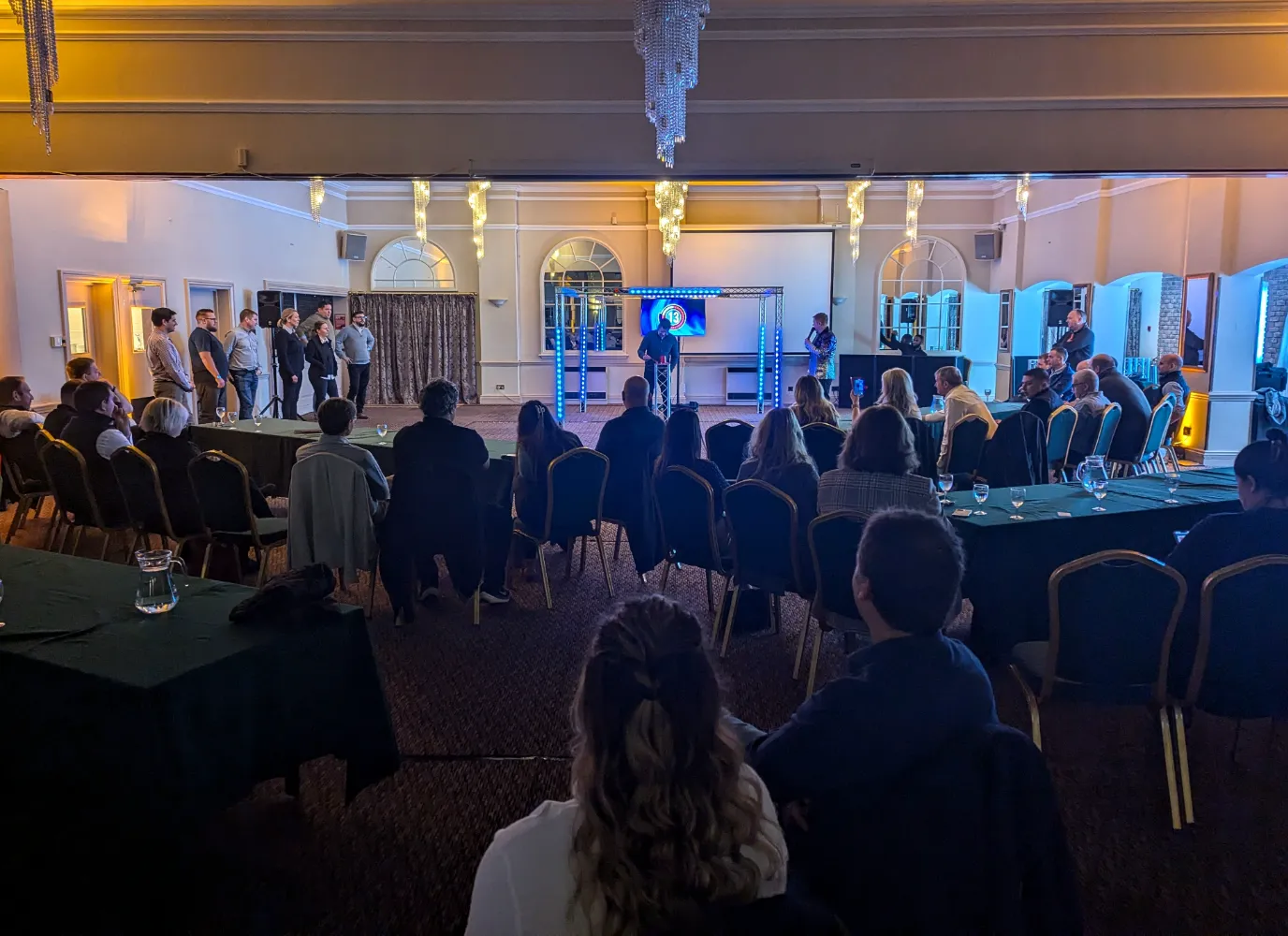
A closing social turns a good day into a remembered one. Our Game Shows and Quizzes suit post-conference or end-of-day socials, and we ran post-conference entertainment for 300 guests at Laravel Live. Jonathan Behr, CTO / VP of Engineering at Laravel Live, said:
“We used Gold Tier Events for an after-conference social with 250+ guests, and I cannot say enough good things about Reece and his crew. They worked with us to understand and implement our requirements, and executed everything professionally and on time. From start to finish, everything was handled perfectly.”
For more ideas, see our conference evening entertainment ideas.
How to organise a conference: the timeline
This suggested schedule works backwards from event day. Compress or stretch it to suit your size and notice.
| When | What to do |
|---|---|
| 6 months out | Agree goal, audience and budget. Name your team. Shortlist venues and dates. |
| 5 months out | Confirm venue and date. Approach anchor speakers. Draft the agenda. |
| 4 months out | Confirm speakers. Book AV and any entertainment. Build the registration page. |
| 3 months out | Open registration and send first invitations. Agree catering with the venue. |
| 2 months out | Send reminders. Collect speaker bios and slide requirements. Finalise the social. |
| 1 month out | Chase registrations. Confirm numbers and dietary needs with the venue. Print signage and badges. |
| 1 week out | Send final logistics to attendees and speakers. Write the run sheet. Brief your team. |
| Day before | Walk the venue. Full tech check. Load slides. Check deliveries and access times. |
| Event day | Run to the run sheet. Check in with the venue, AV and speakers at set times. |
| Day after | Thank speakers and suppliers. Send a feedback survey. Reconcile the budget. |
With less than six months, keep the order and shrink the gaps.
Running the day
On the day, a run sheet keeps everyone aligned. It is a minute-by-minute schedule listing what happens, where, who is responsible and what they need.
Include arrival and setup times for your team and suppliers, each session with its speaker, room and AV needs, break times, a named contact for each area and a phone list. Add a plan for a late speaker.
Arrive well before doors open and walk the whole space. Test microphones, check signage, staff registration and clear the accessible routes. Then stay calm and visible, because people will look to you when something changes.
After the conference and common mistakes
Within a few days, thank everyone, send any promised slides or recordings, and ask for feedback while the day is fresh. Compare results with the success measures from Step 1 and write down what you would change.
Common mistakes: booking the venue before the headcount is clear, packing the agenda with no gaps, treating AV as an afterthought, forgetting setup and breakdown access, skipping the tech check and leaving the social until the last month.
FAQs
How do you prepare for a conference?
Start by writing down the goal and the audience, then lock the budget, date and venue before anything else. Build the agenda, confirm speakers and AV, and open registration. Work back from event day using the timeline table above, and run a full tech check the day before.
What are the 10 steps to plan an event?
Set the goal, set the budget, choose the date and venue, build the agenda, confirm speakers, sort AV and tech, open registration and promote, plan breaks and the social, write the run sheet, then review afterwards. Our seven steps above cover these in the same order.
What are the 7 stages of event planning in order?
A common order is goals, budget, venue, programme, promotion, delivery and review. Each stage depends on the one before: you cannot price a venue without a headcount, or build a programme without knowing the room. Skipping ahead is the usual cause of late changes.
If you would rather hand off the entertainment, AV or venue search, tell us about your event and we’ll put together a tailored proposal. See our conference events for what we can run.