Corporate Event Planning Checklist: Step-by-Step Guide

You have been asked to organise a company event, probably on top of your day job, and you want a list you can work from. A corporate event usually breaks down into ten stages. They run from defining the event through to follow-up. Start around 12 weeks ahead for a typical event, and copy the lists below into your own planner.
We plan and deliver corporate events, so this guide includes details that are easy to miss: access times, floor space, power, buffers and who greets the supplier. It suits events of roughly 20 to 2,000 people.
The corporate event planning checklist at a glance
Each stage has a point in the countdown by which it should be done. Work down this table first, then use the sections below for detail.
| Stage | Aim to finish by | Key tasks |
|---|---|---|
| 1. Define the event | 12 weeks out | Goal, audience, headcount range, owner, sign-off |
| 2. Budget | 12 weeks out | Cost categories, contingency, approval |
| 3. Venue and date | 10 weeks out | Capacity, access, setup time, accessibility, power |
| 4. Programme | 8 weeks out | Agenda, entertainment format, running order |
| 5. Food, drink, inclusion | 6 weeks out | Menu, dietary needs, alcohol-free options |
| 6. Invitations and comms | 6 weeks out, then ongoing | Save-the-date, invitation, reminders |
| 7. Suppliers, AV, branding | 4 weeks out | Briefs, bookings, branding orders |
| 8. Risk and safety | 3 weeks out | Risk assessment, insurance, contingency |
| 9. Final week and day-of | Last 7 days | Final numbers, confirmations, setup |
| 10. After the event | Within 1 week after | Thank-yous, feedback, debrief |
Define the event
Write down why the event exists, who it is for and who signs it off. Everything else follows from those answers.
- Write the goal in one sentence (for example: “thank the sales team and get them mixing with finance”)
- Name one owner who makes the final calls, and one person who signs off the budget
- List who is invited, and set a headcount range rather than one number
- Choose two or three possible dates, avoiding school holidays and big deadlines
- Decide how you will measure success afterwards
A “reward the team” event and a “help two departments work together” event need different programmes, even with the same guest list.
Budget
Build the budget from categories rather than one total, and keep a contingency line from day one.
- Get the total agreed in writing before you contact venues
- Cost: venue, food and drink, entertainment, AV, branding, staffing, transport, accommodation, insurance
- Add a contingency line for late changes
- Ask suppliers what is included and what is extra, such as setup, breakdown, equipment and travel
- Track quotes, deposits and balances in one spreadsheet
When you compare quotes, compare what each includes, not just the headline figure.
Venue and date
A venue is more than capacity. For any event with activities, check how early suppliers can get in, how much clear floor you really have, and where the power is.
- Check capacity for your format; a standing reception holds more than seated tables plus activity space
- Ask for supplier access times, loading access and the breakdown deadline
- Measure the clear floor once tables, stage and buffet are in place
- Confirm power sockets, Wi-Fi and any noise limits
- Check step-free access, accessible toilets, a quiet space and parking
If venue options are thin, our corporate events include a free venue finding service as standard. Bring us your headcount, date and area.
Programme and entertainment
Group size and room size decide what is possible. Settle the shape of the day first, then pick activities that fit the space and the people.
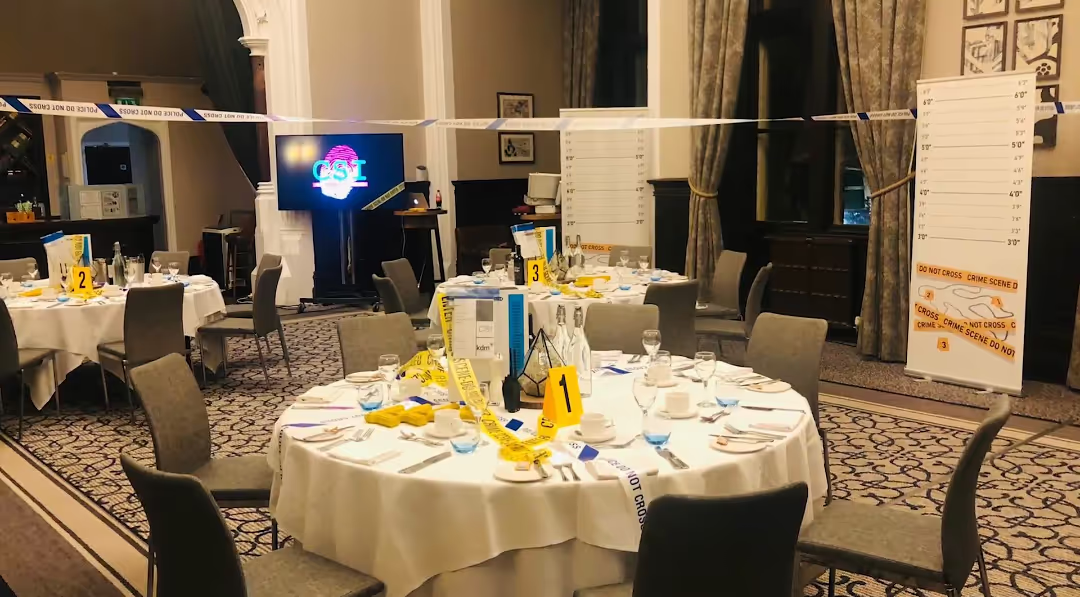
- Draft the agenda in blocks: arrival, welcome, main activity, food, free time, close
- Add 10 to 15 minutes of buffer between blocks
- Choose a format that suits your group size, space and energy level
- Plan for mixed ability, including people who prefer to watch, and for any hybrid colleagues
- Decide who welcomes guests and who thanks them
Here is how a few formats scale, based on what we run:
| Format | Group size and space |
|---|---|
| VR Escape Room | Teams of 4 to 10, up to 500 participants, about 2 x 2 m per team (a table) |
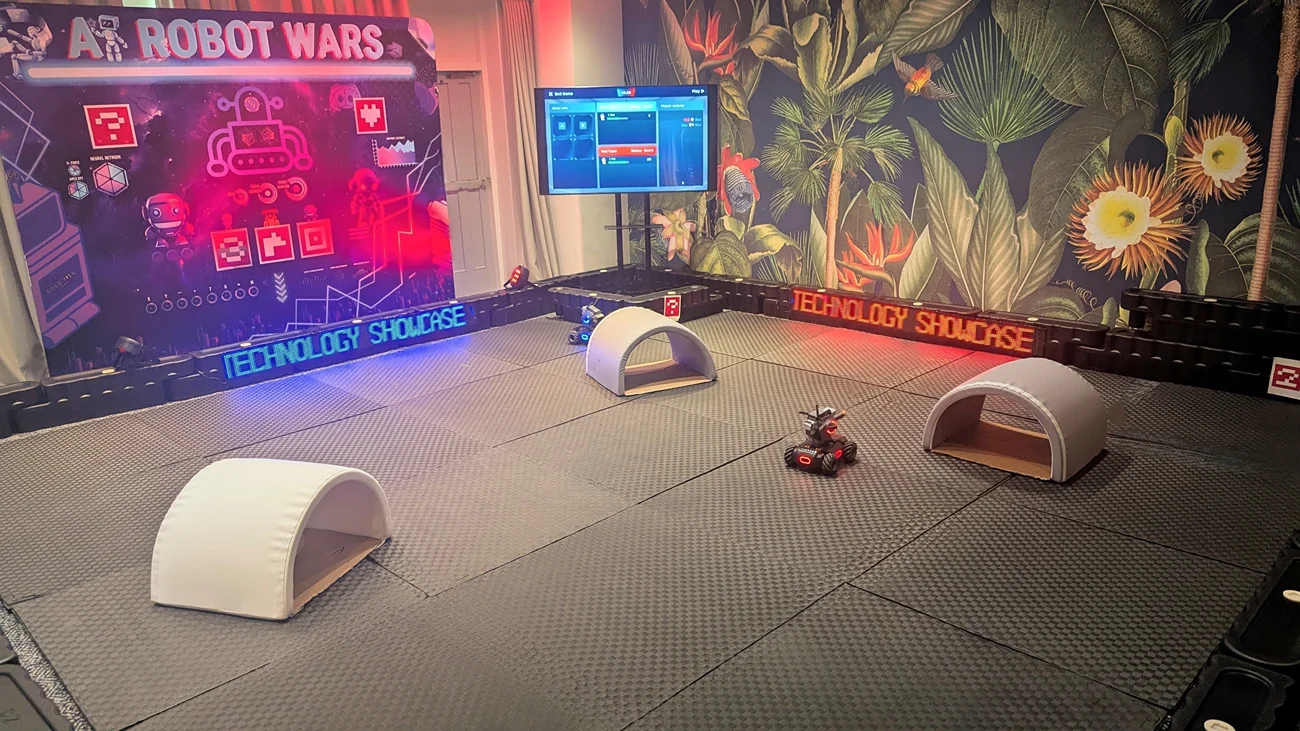
| AI Robot Wars | Teams of 6 to 12, up to 500 participants, tailored from a giant race track to a small arena |
| Game shows and quizzes | Suit post-conference or end-of-day socials, with setup included |
| Indoor team building | From 10 to 100+ people |
See the VR Escape Room, AI Robot Wars and game shows and quizzes.
Food, drink and inclusion
Plan food around the activity. Guests balancing a plate cannot also play a game, so decide whether food comes before, after or between activities.
- Collect dietary and allergy needs on the RSVP form, not on the day
- Offer clearly labelled vegetarian, vegan and gluten-free options
- Provide proper alcohol-free choices, not just water and squash
- Don’t make drinking the centre of the event; use responsible limits if alcohol is served
- Ask about sensory needs, such as loud music or flashing lights, and share the running order in advance
Ask on the invitation, “Anything we should know to make this work for you?” and you will hear about needs you would not have guessed.
Invitations, comms and logistics
Tell people early, then keep telling them. Clear details help avoid no-shows and late arrivals.
- Send a save-the-date once the date is firm
- Send the invitation about 6 weeks out with date, time, address, dress code and an RSVP deadline
- Include travel, parking and a contact number for the day
- Send reminders one week and one day before
- Brief managers so teams are released in time
Suppliers, AV and branding
Brief every supplier in writing, share one run sheet, and name one person they can call on the day.
- Send each supplier a brief: goal, guest numbers, venue, timings, access limits
- Confirm arrival time, setup time and space needed
- Check what is included: equipment, staff, host, AV and branding
- Order signage and branded items with time for proofing
- Write a run sheet with times, names and phone numbers
- Name a person to meet suppliers at the door and show them where to set up
One client, Howdens, described what good looks like: “Gold Tier arrived at the exact time they said they would, they set everything up ready for the start of our event.” (Diane Collins, Business Developer, Howdens). That only happens when access time and meeting point are agreed in advance. For our events, setup, breakdown and all equipment are included, with professional hosts. Whoever you choose, ask what is and is not included.
Risk, safety and contingency
Check the legal and safety basics early, because they can change the venue, format or budget. These are general pointers only; confirm the detail with your venue, insurer and local authority.
- Do a written risk assessment for the venue and each activity (HSE guidance on risk assessment)
- Ask your insurer whether your cover includes the event and suppliers’ activities
- Confirm who holds the licences for alcohol and music at the venue
- Check accessibility duties under the Equality Act 2010 (gov.uk guidance)
- Identify first aiders, fire exits and the venue’s emergency contact
- Make a plan B for weather, transport disruption, supplier no-shows and low turnout
Final week and day-of
In the last week, confirm everything twice and write down anything that lives only in your head. On the day, you want to be free to solve problems, not carry boxes.
- Send final numbers to the venue and caterer, and the final run sheet to everyone
- Confirm arrival times and contacts with every supplier
- Print badges, signage and any seating plan
- Pack an emergency kit: chargers, tape, pens, plasters, spare lanyards
- On the day, arrive in time to meet the venue and suppliers at their access time
- Walk the room: floor space, power, sightlines, signage
- Greet guests at the door and point them to the first activity
- Keep to the run sheet, using your buffers if things slip
After the event
Follow-up is where an event pays for itself. Thank people quickly, ask for feedback while it is fresh, and compare the result with the goal you wrote at the start.
- Thank guests, suppliers and the venue within 24 hours
- Send a short feedback survey of 3 to 5 questions
- Review spend against the budget
- Hold a 20-minute debrief: what worked, what to change
- Save the run sheet and supplier contacts for next time
12-week timeline
Twelve weeks is a comfortable starting point for most company events. Large events, peak dates such as December, or in-demand venues need longer; simple events can come together faster.
| When | What to do |
|---|---|
| 12 weeks out | Goal, owner, headcount range, budget, provisional dates |
| 10-11 weeks | Shortlist and book the venue; confirm the date |
| 8-9 weeks | Draft the programme; enquire with entertainment suppliers |
| 6-7 weeks | Book suppliers; confirm menu; send save-the-date and invitation |
| 4-5 weeks | Brief suppliers in writing; order branding; chase RSVPs |
| 3 weeks | Risk assessment, insurance check, contingency plan |
| 2 weeks | Collect dietary and access needs; draft the run sheet |
| 1 week | Final numbers, confirmations, final run sheet |
| Day-of | Arrive early, walk the room, run the day |
| 1-7 days after | Thanks, feedback, debrief |
Common mistakes to avoid
- No named person to meet the supplier. Setup stalls while someone hunts for a key.
- Activity space underestimated. The room holds the guests, but not the tables, stage and activity as well.
- No buffer in the run sheet. One late course puts the whole evening behind.
- Alcohol as the whole plan. Non-drinkers are left out.
- Dietary needs collected on the day. Caterers cannot adapt at the last minute.
- Access needs forgotten. Step-free routes or a quiet space turn out to be missing.
When to bring in an events partner
You can run a good event from this checklist alone. A partner is worth considering when the activity side is complex, your time is short, or you want one supplier to take the whole day off your hands.
Our corporate events cover groups from 20 people to 2,000, and include full planning and coordination, a curated mix of interactive experiences, setup, breakdown and all equipment, professional hosts, and free venue finding. Custom branding and theming are available. Our event management service covers venue sourcing, entertainment, catering and transport coordination end to end.
FAQs
What are the five P’s of event planning?
There is no single official list, and sources word the five P’s differently. One version, from Cadmium, is purpose, people, place, programme and price; the marketing version is product, price, place, promotion and people. Either way, they map onto this checklist: define the event covers purpose and people, venue covers place, and programme covers the agenda.
How do you host a corporate event?
Start with a clear goal, a headcount and a named owner. Then agree a budget, book a venue and date, build the programme, sort food and access needs, brief your suppliers, and send invitations. In the final week, confirm everything and write a run sheet. Afterwards, collect feedback and measure the event against your original goal.
What are the 10 steps to plan an event?
One workable ten-step version: set the goal, set the budget, confirm headcount, choose the date, book the venue, build the programme, arrange food and drink, brief suppliers, invite and communicate, then run the event and follow up. Each step has its own section in this checklist, with a timeline showing when to do it.
What are the legal requirements of an event organiser?
They depend on the event, venue and what is served or played. Typical areas include health and safety and risk assessment, insurance, alcohol and music licensing, and accessibility duties under the Equality Act. Your venue, insurer and local authority can confirm what applies, and gov.uk and the HSE publish current guidance. Check early, not in the final week.
How far ahead should I start planning?
For a typical company event of 20 to a few hundred people, starting around 12 weeks ahead gives comfortable room to find a venue, book suppliers and invite people. Smaller or simpler events can come together faster, and large or peak-season events, such as December parties, benefit from longer. Use the 12-week timeline above as a starting point.
Tell us about your event and we’ll put together a tailored proposal. Start your enquiry, or call us on 020 3355 5453. We reply within one business day.