Fun Ways to Teach Employees About AI (9 Ideas)
You have been asked to get everyone up to speed on AI. Some of your colleagues are keen, some are sceptical and some are quietly worried. The fun ways to teach employees about AI fall into three types. Quick do-it-yourself exercises get people trying a tool on a real task. Facilitated team challenges turn AI topics into a game. Hands-on tech experiences, such as robot battles and VR, take the mystery out of it.
Which one you choose depends on how much time you have and how confident your group is. A game gets people in the room and talking. It is a hook, not a curriculum, so each idea below comes with a way to turn the fun into learning.
Before you start: what do you want people to learn?
Decide on one outcome first, because it shapes every choice after it. The answer is usually one of four things: confidence to try a tool, safe use at work, spotting when AI gets things wrong, or ideas for their own role.
- Confidence: pick low-stakes, team-based formats where nobody is put on the spot.
- Safe use: pair any activity with a short company guideline, covering what can and cannot be pasted into an AI tool.
- Spotting errors: use the fact-check race or the AI-versus-human game below.
- Ideas for their role: use the role-swap exercise, then share results across teams.
Quick, low-cost formats (15 to 45 minutes)
These need no supplier, no budget and no technical skill, only a projector, laptops or phones and an AI tool your company already allows. They are things you can run yourself, for example as a lunch-and-learn. Check your company’s AI policy first, and use dummy data rather than real client or personal information.
1. Prompt-off
Give every team the same task, such as writing a short announcement for a new office plant scheme, and ask them to write their own prompt. Put the results side by side on screen. People quickly see how much the wording of a prompt changes the answer, and that a first attempt is rarely the best one.
2. Spot the AI error
Generate a short, confident-sounding summary on a topic your team knows well, then seed it with a few mistakes, or ask teams to find the ones the tool made on its own. Teams race to find and correct them. It teaches the most useful habit of all: check the output before you rely on it.
3. AI versus human
Mix short pieces of writing, some produced by AI and some by colleagues, and have teams vote on which is which. It sparks debate and shows that AI text has recognisable habits.
4. Role-swap
Ask each person to bring one real, non-sensitive task from their own job and try an AI tool on it for 15 minutes. Then they report back: what saved time, what needed fixing, what they would not trust it with. This is the closest of the four to actual training, because the learning is about their own work.
Facilitated team challenges
Challenges work when you want energy in the room and mixed teams learning together. They are best run by a host, so that you can take part rather than referee.
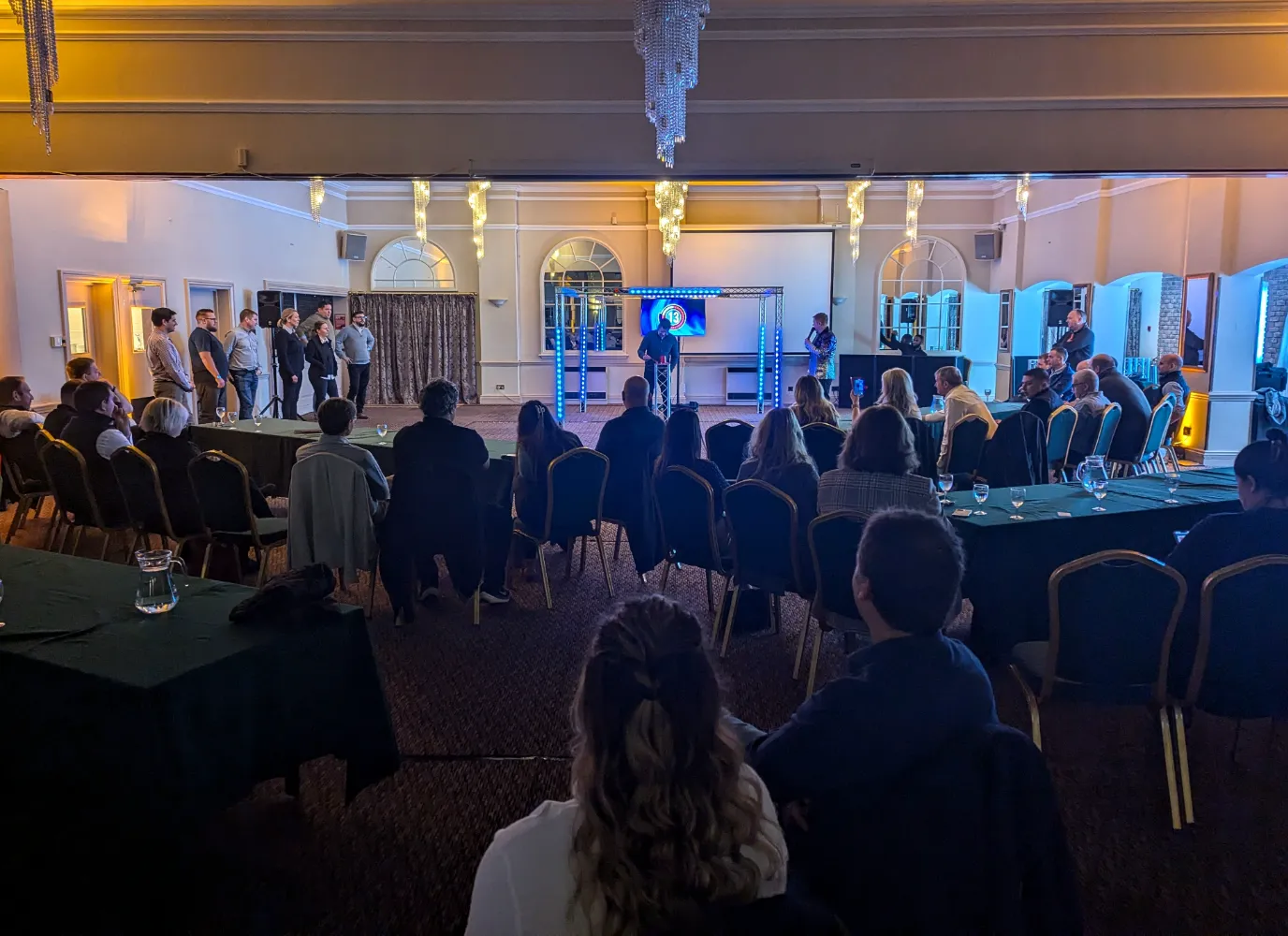
5. A game show or quiz built around AI questions and myths
A quiz is an easy way to cover the basics without a lecture: what AI tools can do, where they fail, what your company’s policy says. Questions can be yours, as the topic is the content and the format is only the wrapper. Our game shows and quizzes include Taskmaster-style challenges, Cube challenges, quizzes and bingo, with company-themed customisation and setup included. Tell us what you want the questions to cover and we will talk through how a quiz could be tailored to it.
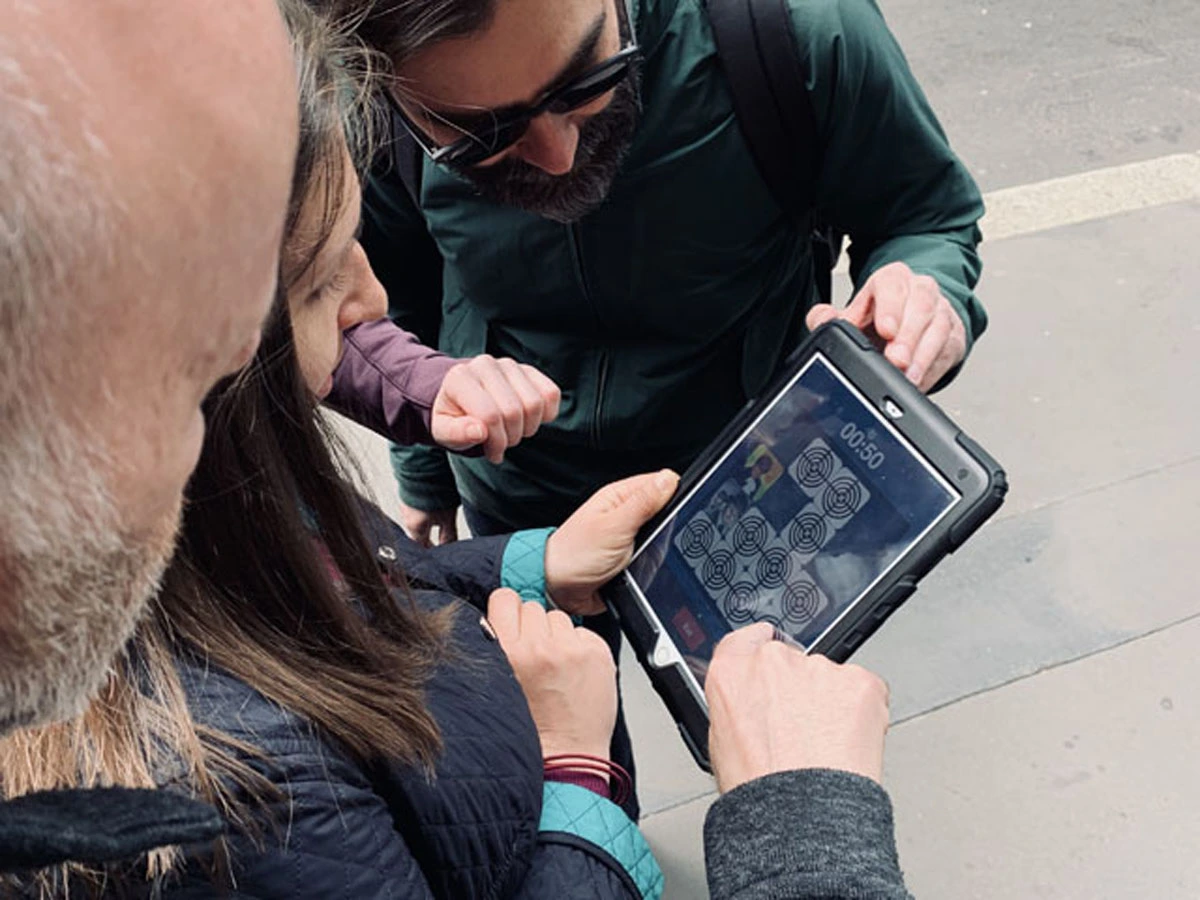
6. A tablet treasure hunt
If your team is not all at one desk, getting out of the building helps. Our tablet treasure hunt is an outdoor hunt of geotagged challenges on tablets, with prizes for the winning team. It is a team activity rather than AI training in itself, so use the debrief to connect it: which clues did you solve by splitting up, and where would a tool have helped?
Hands-on AI experiences (when you want a day, not a session)
Sometimes the aim is to take away the mystery. Seeing and handling AI-themed technology in a relaxed setting is a good way to do that, particularly for people who think AI is “not for them”. These are experiences we run, and none of them needs technical experience.
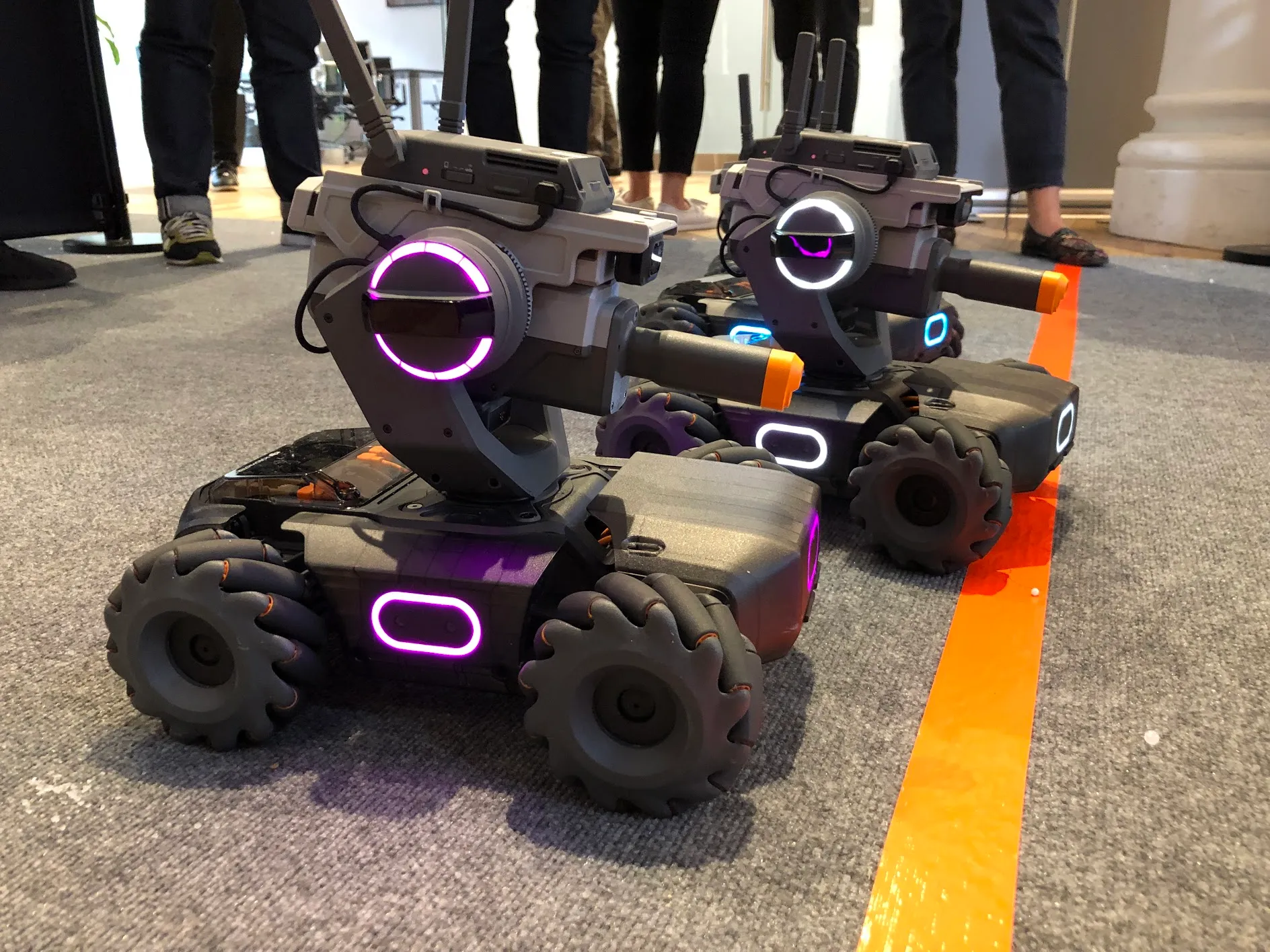
7. AI Robot Wars
Teams of 6 to 12 take part, in an arena tailored to the space, from a giant race track to a small arena, for up to 500 participants. No AI, robotics, coding or VR experience is needed. Read more about AI Robot Wars. It makes technology feel playful and approachable, which is half the battle with a nervous group.
8. The AI and Metaverse arcade
The AI and Metaverse experience arcade offers 1 to 50 VR headsets, suits groups of 10 to 1,000 and is beginner friendly. Activities include Robot Wars, Metaverse Sports and Reaction Machines, so there is something for different comfort levels.
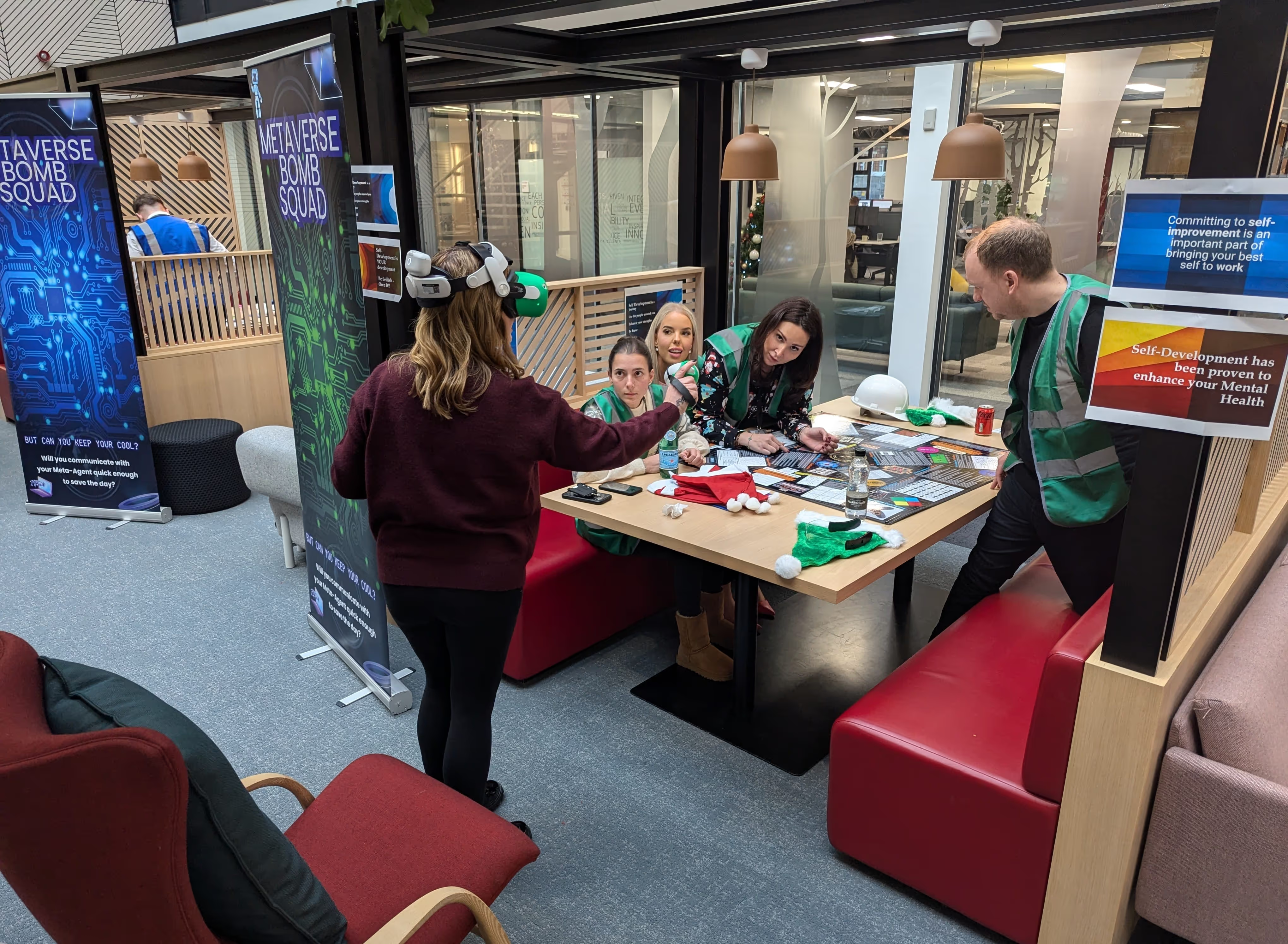
9. A VR escape room as a no-pressure tech intro
In our VR escape room, teams of 4 to 10 work together, and the photo below shows one player in the headset while teammates read the manual. It needs about 2 by 2 metres per team (a table), suits up to 500 participants and needs no VR experience. It is a gentle first step into new technology for people who would never volunteer for a demo.
For the team-bonding side of these formats, see our wider team building events.
Which fun way to teach employees about AI suits your group?
| Idea | Time | Group size | Tech skill needed | Best for |
|---|---|---|---|---|
| Prompt-off | 15 to 30 mins | Any, in teams | None | Building prompt confidence |
| Spot the AI error | 20 to 45 mins | Any, in teams | None | Checking AI output |
| AI versus human | 15 to 30 mins | Any | None | Starting a conversation |
| Role-swap | 30 to 45 mins | Any | None | Ideas for real jobs |
| Game show or quiz | Ask us | Teams at tables | None | Covering the basics with energy |
| Tablet treasure hunt | Ask us | Teams | None | Getting outside together |
| AI Robot Wars | Ask us | Teams of 6 to 12, up to 500 | None | Making tech feel playful |
| AI and Metaverse arcade | Ask us | 10 to 1,000 | None, beginner friendly | Large, mixed groups |
| VR escape room | Ask us | Teams of 4 to 10, up to 500 | None | A gentle tech intro |
Making it stick
A fun session on its own will fade by Friday, so build in a few follow-ups.
- Debrief for ten minutes. Ask: what surprised you, what would you trust AI with, what would you double-check, what will you try this week?
- Hand out a one-page safe-use guide. Keep it plain: which tools are approved, what information must never be pasted in, and who to ask. Base it on your own company policy and check any data protection points with whoever owns that in your organisation.
- Follow up within a fortnight. A short message asking people to share one thing they tried keeps momentum going.
- Name a champion in each team. One curious person per team who can answer small questions is worth more than another workshop.
Keeping everyone included
Anxious sceptics are often your most valuable learners, so design for them. Put people in mixed teams, give each person a clear role, and avoid any format that asks someone to perform alone.
For hybrid or remote staff, the quick formats above work well on a video call with breakout rooms. For in-person experiences, tell us about access needs when you enquire, and confirm with us what is possible for each activity before you book.
FAQs
How do you teach people about AI?
Start with a hands-on task rather than a presentation. Give people a real piece of work, let them try an AI tool on it in small teams, then debrief on what worked, what went wrong and what they would check next time. Add a short company guideline on safe use, so the fun turns into habits.
What are some fun activities related to artificial intelligence?
Good options include a prompt-off where teams compare results from the same task, a spot-the-error race, an AI-versus-human guessing game, a game show built around AI myths, and hands-on experiences such as AI Robot Wars or a VR escape room. Pick by time available and how confident your group feels.
What are some fun and engaging training ideas for employees?
Anything that makes people do something together beats a slide deck: team challenges, quizzes, treasure hunts and tech experiences. Keep sessions short, mix abilities within teams, make the stakes low, and always finish with a debrief so people can say what they learned and what they would try at work.
Tell us about your event and we’ll put together a tailored proposal. Enquire here.