How to Choose a Corporate Event Venue: UK Checklist
Someone has asked you to find a venue, and the date, headcount and budget are already fixed. To choose a corporate event venue, build the choice around what you will do in it. Start with your purpose, headcount and budget. Then match a venue type, check the practical factors and confirm the room works for your activities before you sign.
Here is the process in order:
- Fix your purpose, headcount, date and budget.
- Pick the venue type that suits the event.
- Shortlist on location, capacity, accessibility, catering, AV and weather backup.
- Check the space against your activities.
- Visit with a list of questions.
- Read the contract before you sign.
How to choose a corporate event venue: start with purpose, headcount and budget
Write down why the event is happening, how many people will come and what you can spend before you look at a single venue. These three answers decide which venues are even worth a call.
- Purpose: a networking drinks event needs standing room and flow. A team challenge needs tables and clear floor.
- Headcount: use the number you expect to attend, not the invitation list. Then ask each venue for its capacity in your layout.
- Budget: decide the total, then see what the venue takes of it. Hire is only one line, alongside catering, entertainment, AV and any extras.
Match the venue type to the event
The right type of venue depends on what the event needs to feel like and what it needs to do. Each type has trade-offs.
| Venue type | Pros | Cons | Best for |
|---|---|---|---|
| Hotel or conference centre | Rooms, catering and AV often on site; easy for travellers | Can feel generic; may have set suppliers | Conferences, away days, evening events after a meeting |
| Unique space (museum, gallery, historic building) | Memorable setting; strong first impression | Access and rules can be strict; fewer built-in facilities | Client events, launches, awards |
| Restaurant or pub function room | Food and drink handled; relaxed feel | Limited floor space; noise from other areas | Small socials, team dinners |
| Outdoor or marquee | Lots of room; flexible for large activities | Weather plan essential; facilities may need hiring in | Summer parties, family fun days, sports-style activities |
| Your own office | No hire fee; familiar | Less of a break from work; space and noise limits | Short team socials, small activities |
These are general trade-offs, not rules: individual venues vary, so judge each one on its own terms.
The factors that matter
Once you have a type, compare shortlisted venues on the same set of factors so you are not swayed by a good tour.
Location and transport links. Think about where your people travel from. Is it near a station, and is the last train home a sensible time?
Capacity and layout. A venue’s headline capacity usually applies to one layout, often standing. Ask for the number in the layout you need, whether that is rounds of tables, theatre or open floor. If you will have staging, a bar and an activity area, those take space from the total.
Accessibility. Check step-free access from arrival to the room, accessible toilets, lifts and clear routes around the space. Service providers, venues included, have a duty to make reasonable adjustments for disabled people under the Equality Act 2010, but the practical details vary, so ask the venue directly and see the route yourself.
Catering and dietary needs. Find out whether catering is in-house, how the venue handles allergies and dietary needs, and what is on offer for people who do not drink alcohol.
AV and wifi. Ask what is installed, what the hire fee includes and whether the wifi copes with a full room.
Parking and weather. Ask how many spaces there are, where suppliers can unload, and what the wet-weather plan is for anything outdoors.
Flexibility. Check whether the room can be reconfigured and what happens if your numbers change.
Check the space works for your activities
A venue that suits a dinner can still be wrong for an interactive event, so test the room against what you plan to run. Space, power, noise and access are the four things that most often go wrong.

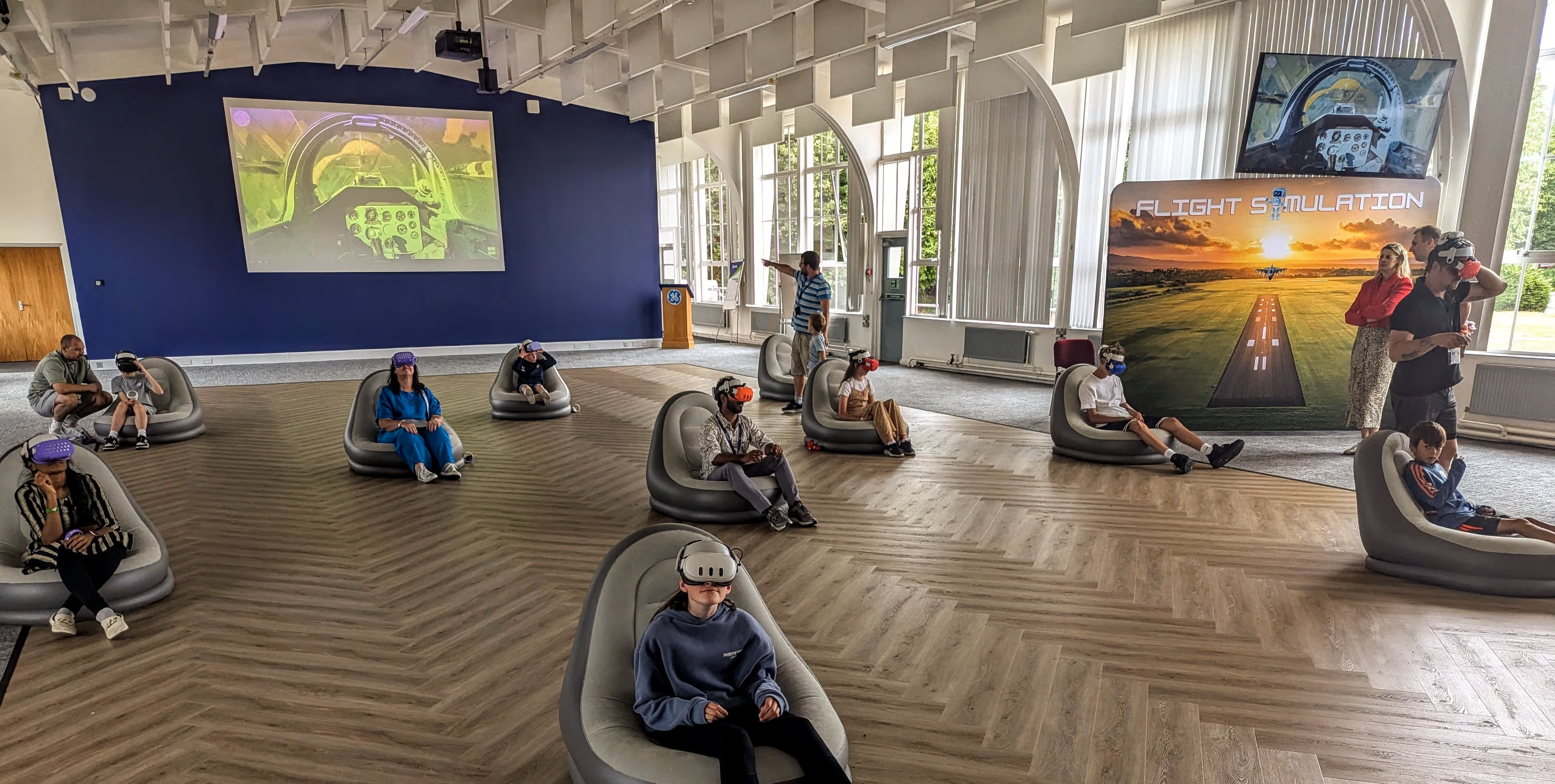
Floor space per team or station. Activities have footprints. Our VR Escape Room runs with teams of 4 to 10, and each team needs about 2 by 2 metres, which is roughly a table. Our VR Flight Simulator needs about 1 by 1 metre per headset, with 1 to 30 headsets. Running several teams at once? Multiply, then add space to walk between them. Our indoor team building formats run from 10 to 100+ people, so tell us your room size early and we can match the format to it. See all our team building events.
Power. Ask where sockets are in the room and how far they are from where the equipment will go. Long cable runs across walkways are a trip hazard, so check the layout works with the power you have.
Noise. A game show or arcade evening needs a room where music and cheering will not disturb a neighbouring event. Ask what else is booked at the same time.
Setup time and load-in. Ask when you can get in, how equipment reaches the room (lift, stairs, loading bay) and how long the suppliers have. We turn up, set up and break down as part of our events. As one client told us: “Gold Tier arrived at the exact time they said they would, they set everything up ready for the start of our event.” — Diane Collins, Business Developer, Howdens. That only works if the venue gives us the time and access to do it.
Questions to ask on a site visit
Visit with a printed list and see the room set up the way you want it, ideally at the time of day your event will run. Here is a checklist to take with you:
- What is the capacity in my layout (rounds, theatre, standing)?
- Can I see the room set up in that layout?
- What is the step-free route from the entrance to the room?
- What is included in the hire fee: furniture, AV, staff, cleaning?
- Where are the power sockets, and is there enough supply for additional equipment?
- How does wifi perform with a full room?
- What time can suppliers get in, and how does equipment reach the room?
- Are outside suppliers and caterers allowed, and is there any fee?
- What are the noise limits and curfew?
- What is the wet-weather or backup plan?
- Where is parking, and where is the nearest public transport?
For fire safety capacity, licensing and similar rules, ask the venue to confirm its limits in writing, and check with your local authority if you are unsure.
Read the contract
The contract is where surprises hide, so read it all before you pay a deposit. A few points to look for:
- Hire period: does it include setup and breakdown, or only the event itself? A room booked from 6pm can leave suppliers no time to set up.
- Cancellation and changes: what you owe if you cancel or numbers drop, and by when.
- Outside suppliers: whether you can bring in your own entertainment, caterers or equipment, and any fees or approved lists.
- Minimum spend: what food and drink you must buy, and whether it counts towards the room hire.
- Curfew and noise limits: when music and activity must stop, and when everyone must be out.
When to use a venue finding service
A venue finding service saves time if you are short on it or new to the market. Instead of sifting through dozens of options, you give a brief and receive a shortlist that fits your headcount, budget and plans.
Ask how the service is paid and whether the shortlist is impartial. One run by the company delivering your entertainment can match the room to the programme from the start.
We offer a free venue finding service as standard with our corporate events, and our event management covers venue sourcing, entertainment, catering and transport coordination end to end. We deliver events across the UK, for groups from 20 people to 2,000.
FAQs
How far in advance should you book a corporate event venue?
As early as your date allows. Popular venues fill first for peak dates such as December, and a short list gets shorter the later you start. Fix your date, headcount and budget, then book a site visit quickly. For a large or seasonal event, start searching several months ahead and confirm what the venue can hold.
What is the most important factor when choosing a venue?
Whether the space suits what you will actually do in it. A venue can look perfect and still fail if the layout, power, AV or access do not fit your programme. Start from your purpose and activity, then check capacity, location and accessibility against that.
How do you work out what size of venue you need?
Start with your confirmed headcount, then ask the venue for its capacity in your exact layout, such as theatre, cabaret or standing. Add the floor space your activities need, plus room for catering, staging and moving around. Capacity quoted for one layout does not carry over to another.
What should you ask a venue before booking?
Ask what the hire period includes, when your suppliers can load in, whether outside suppliers are allowed, and what the cancellation terms are. Check minimum spend, curfew, power, wifi, accessibility, parking and the wet-weather plan. Then ask to see the room set up in the layout you want.
Should you use a venue finding service?
It is worth it if you are short on time or new to venue hunting. A good service shortlists spaces that fit your headcount, budget and activities, so you visit fewer places. Ask who it is free for, how the venue is paid, and whether the shortlist is unbiased.
Next step
Tell us about your event and we’ll put together a tailored proposal. Send us your enquiry and we will reply within one business day.