How to Increase Event Attendance: 8 Practical Ways
Your last event had a thin turnout, or you are worried the next one will. The fix is rarely more marketing. To increase event attendance, find out why people said no. Then make yes easy, give them a reason to come and keep in touch until the day.
This guide assumes you are inviting a known list: staff, clients or members. If you are selling tickets to the public, the same steps apply, with a few notes along the way.
Why people don’t turn up
People skip events for a handful of ordinary reasons: the date clashes with something else, they can’t see what is in it for them, registering is a hassle, the event sounds like every other one, or getting there is awkward. Most of these are fixable before you send a single invite.
If you can, ask a few colleagues or past guests why they missed the last one.
How to increase event attendance before you invite
Much of attendance is shaped before the invite goes out, by the date, the purpose and the format.
1. Pick the date, time and place around your guests
Choose a slot that suits the people you want, not the one that is easiest for the organisers. Check school holidays, month-end or quarter-end deadlines, big company launches and days when many people travel. This is judgement rather than data, so test it with a few guests first.
Location matters as much as date. A venue near the office or station beats a scenic one that needs a long journey. If you need help, our free venue-finding service comes as standard with our corporate events.
2. Start with what the event is for, and who it is for
Write one sentence on the purpose, such as “a thank-you for the sales team” or “a chance for clients to meet our new product leads”. If you can’t say why someone should give up an evening, they won’t either. Put that sentence at the top of the invite.
3. Choose a format people want to join
The programme is a strong reason for people to turn up. “Social evening” asks guests to imagine something. “Driving simulators, a game show and a quiz” gives them a picture, so put the format in the invite.
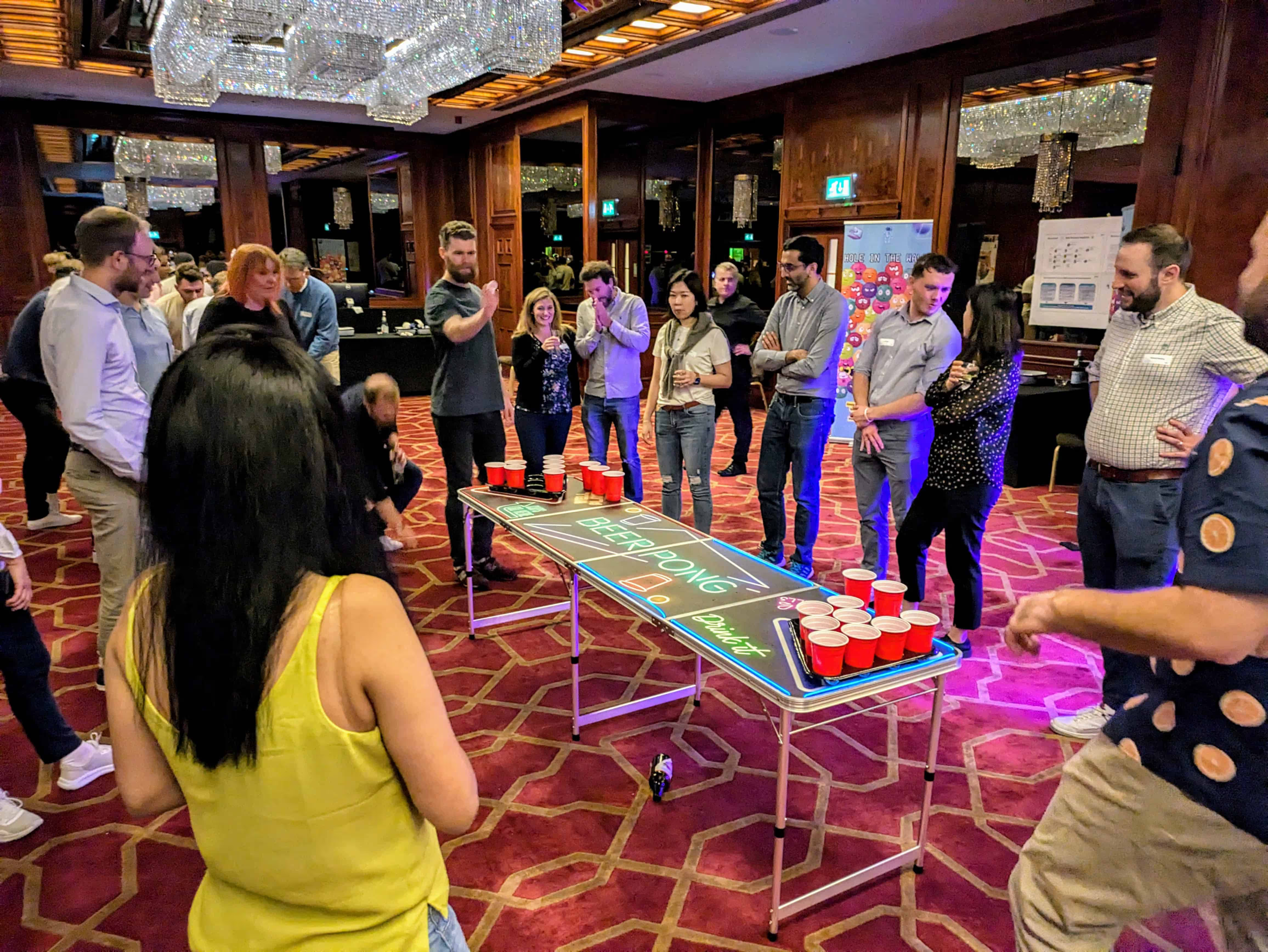
Interactive formats, including team building activities, also suit mixed groups, because nobody has to stand around making small talk. We run corporate events for 20 people or 2,000, and game shows and quizzes, VR experiences and driving simulators are among the formats. Offer something for non-drinkers and for people who prefer to watch, and say so on the invite.
Making the invite easy to say yes to
A good invite is early, personal, short to answer and specific about what will happen.
4. Invite early, then often
Send a save-the-date as soon as the date is fixed, the full invite once details are set, and reminders after that. Use the channels your guests actually read, which for staff might be a team chat message and for clients a direct email from their contact. One email is easy to miss.
5. Ask personally
A message from a manager, or a champion in each team, tends to work better than a group email. People find it harder to ignore a direct ask from someone they know. Give those champions a line or two to say about what is planned.
6. Keep registration to one short step
Every extra field can cost you sign-ups. Ask only for what you need now, such as name, email and dietary or access needs, and collect the rest later. Make sure the form works on a phone.
7. Show a taste of the programme
Photos from a previous event, or a short quote from a past guest, help people picture it. One of our clients, Howdens, told us “The driving simulator was amazing and enjoyed by all our customers and staff.” A line like that, from someone who was there, does more than a description.
8. Use a deadline honestly
A registration deadline gives people a reason to decide now. For ticketed events an early-bird price can do the same. Keep it honest: if the deadline moves every week, people stop believing it.
Between sign-up and the day
Registered is not the same as attending, so keep in touch. Send a calendar invite straight away, then a reminder a few days before with the address, arrival time, travel and parking details, and what to expect. Ask about dietary and access needs and say how they will be met. Allow plus-ones where it makes sense, and keep a waiting list if numbers are capped, so a cancellation becomes someone else’s seat.
On the day: make people glad they came
Next year’s attendance is shaped by this year’s event. Have a host who welcomes people, explains what happens and gets the first activity started within minutes of arrival, so nobody is left hovering by the door. Everything should be set up before the first guest walks in, with equipment ready and the room laid out. If you would rather not run that alone, end-to-end event management covers it.
That is what our hosted formats are built for: setup, breakdown and all equipment come as standard, with professional hosts. Jonathan Behr, CTO / VP of Engineering at Laravel Live, said of their after-conference social, “We used Gold Tier Events for an after-conference social with 250+ guests, and I cannot say enough good things about Reece and his crew.”
Special case: conferences and client events
At a conference, the sessions fill the day but numbers can fall away at the evening social. Tell delegates what the evening holds before they travel, and make it something they can join without already knowing anyone. A game show or quiz can suit that slot, and our Game Shows & Quizzes are suited to post-conference or end-of-day socials. For more on building interaction into the day itself, see our conference experiences.
How to measure and learn
Track registered against attended, not just sign-ups. Note which channels and which managers’ teams brought people in, and send a three-question survey afterwards, including “what would have stopped you coming?” Ask no-shows, too, kindly. Use the answers when you set the next date.
Tell us about your next event
Tell us about your event and we’ll put together a tailored proposal. Enquire here and we’ll reply within one business day, or call 020 3355 5453.
FAQs
How do you increase attendance at an event?
Work out why people say no, then fix it. Pick a date that avoids clashes, say clearly what the event is and what will happen, make registration quick, ask in person as well as by email, and send reminders that include the practical details. A programme people want to join is a major draw.
What are some strategies to improve event attendance?
Choose the date around your guests, invite early and more than once, get managers to ask their teams personally, keep registration to one short step, show a taste of the programme, and send reminders with logistics. On the day, host properly so people tell colleagues it was worth going.
How do I get people to come to a party?
Ask personally, give a clear date early, and say what will happen. People turn up for a format they can picture, such as a game show or driving simulators, more readily than for a vague social evening. Make it easy to bring a plus-one and tell them about food and drink options.
How do you stop people dropping out after they register?
Keep in touch between sign-up and the day. Send a calendar invite straight away, a reminder with travel and arrival details a few days before, and a short note on what to expect. Ask about dietary and access needs so people feel the event has been planned for them.