Taskmaster Team Building: How to Run It at Work
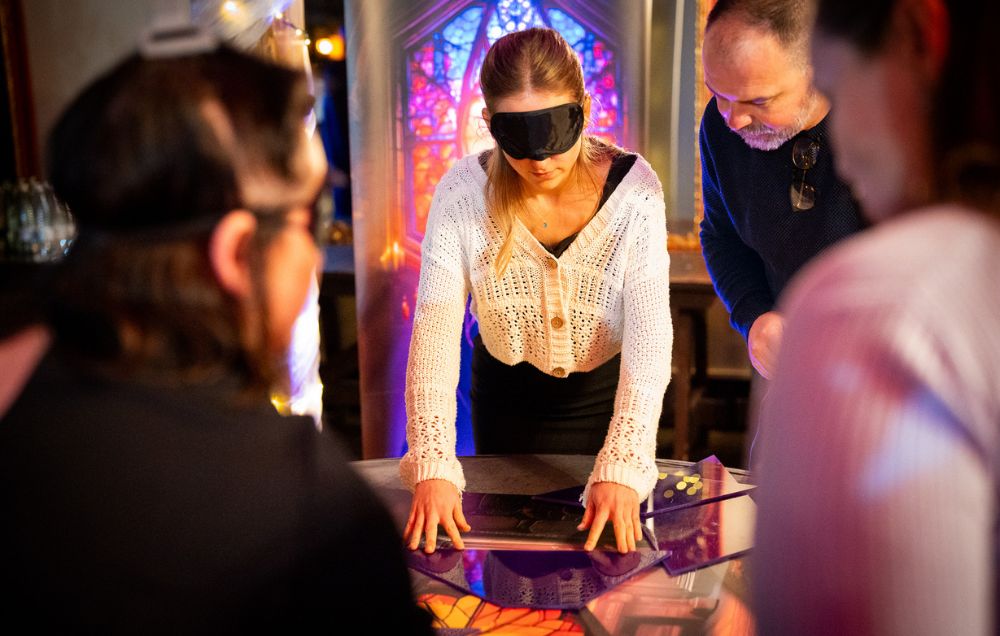
Someone on your team has suggested a Taskmaster-style session. Will it work with a mixed room, where some people may not know the show? It can, if you design it with care. Taskmaster team building means teams tackle odd, cryptic tasks against the clock, and a host judges and scores the results. This guide covers how a session runs, which tasks work, what goes wrong, and when it is worth hiring a host.
What is Taskmaster team building?
Taskmaster team building is a games session where teams complete short, quirky tasks and are scored by a host acting as judge. It borrows the spirit of the TV show: tasks are slightly ambiguous, and the fun comes from watching colleagues find unexpected ways to solve them.
Why does the format suit work teams?
The barrier to entry is low and the humour does the heavy lifting. Most tasks reward creativity over skill, so a new starter and a director contribute equally, and nobody has to perform alone in front of the room.
It also gets people working with colleagues they rarely speak to, because teams must agree an approach quickly.
How does a Taskmaster session run?
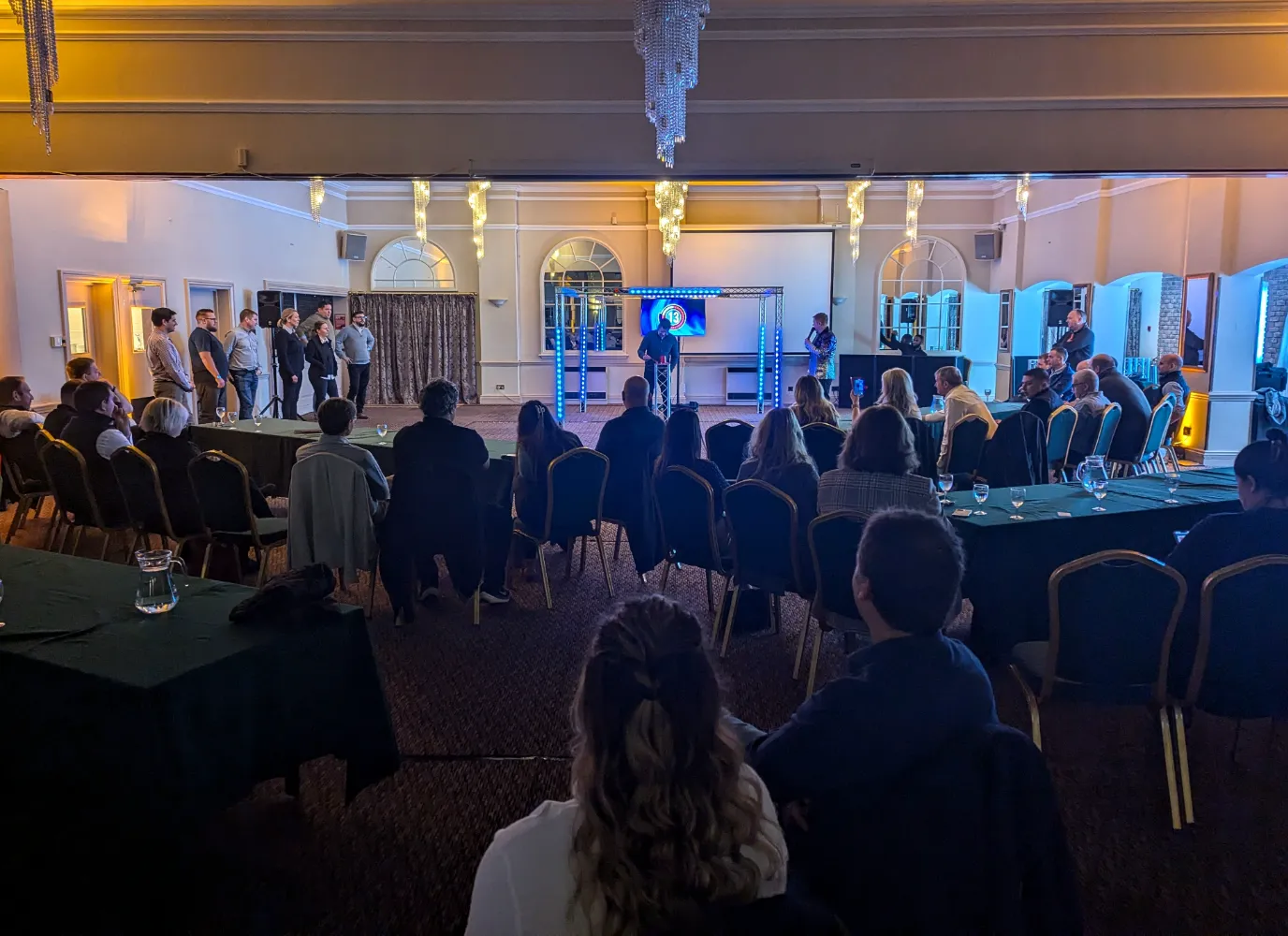
A session follows a simple rhythm: briefing, a round of tasks, judging, then a final scoreboard. Scores are announced after each round to keep the competition alive.
Teams and group size
Teams of four to six work well because everyone has a role and nobody can hide. Mix departments where you can, and split managers from their direct reports. Larger groups simply mean more teams; the limit is how many the host can judge fairly.
The host and the scoring
The host reads each task, keeps time, rules on disputes and awards points. Scoring should be agreed before the day: for example, points for first, second and third, with bonus points for the most creative or funniest attempt. A printed scoring guide stops arguments.
If you run it yourself, pick someone confident who is not on a team. If you hire a supplier, ask who will present on the day.
Timing and the room
Allow time for the briefing, each task, judging and the final scoreboard, and keep every task short. Keep spare tasks in reserve in case one falls flat. You need space for teams to spread out, a way to show the scores, and somewhere for the host to stand.
What types of task work well?
The best tasks fall into a handful of categories, and a good session mixes them so different strengths get a turn. The examples are generic on purpose.
- Creative: make, draw or build something from a limited set of objects, such as the tallest tower from stationery or a team portrait from items in a bag.
- Lateral thinking: a brief with a loophole, where the cleverest reading of the wording wins.
- Light physical: moving, balancing or transporting something carefully. Keep it gentle, with no lifting or running.
- Teamwork: tasks where each person holds one piece of the information or one limited ability.
- Quick-fire: a one-minute scramble for a point.
What makes a task go wrong?
Tasks go wrong when they frustrate rather than amuse. Four problems come up again and again:
- Unfair ambiguity. A cryptic brief is fun; a brief where no one can tell what is allowed is not.
- Dexterity or fitness demands. Anything that needs fine motor skills or physical strength leaves some people out.
- Too many rules. If the host needs two minutes to explain a task, it is too complicated.
- Favouring extroverts. Give every task a role that suits a quieter person, such as the planner or the reader.
How do you make it inclusive?
Design tasks with a range of colleagues in mind, then confirm specifics with your venue or supplier. Offer an alternative for anyone who cannot do a task, and don’t force anyone into the spotlight.
- Non-drinkers: run the session without alcohol, or make drinks entirely optional. Laughing is the main event.
- Mobility: pick seated or low-movement tasks, and confirm access to the room and toilets.
- Neurodiversity: share the format in advance, write each task down as well as reading it out, and avoid surprise noises or sudden changes.
- Remote or hybrid teams: use tasks that need only a webcam and everyday items, and give remote players an equal chance to be judged.
Confirm accessibility needs and venue rules with your supplier before the day.
Should you do it yourself or hire a host?
You can absolutely run a Taskmaster-style session yourself, and for a small team on a tight budget it is a good choice. The trade-off is time and atmosphere. Here is how the two options compare.
| DIY | Hosted | |
|---|---|---|
| Effort | You write, test and print the tasks | The tasks are designed for you |
| Props | You gather everything | Setup and equipment are provided when we run it |
| Scoring | One of your colleagues judges, and may be on a team | A neutral outsider can score consistently |
| Atmosphere | Depends on your host’s confidence | An outside presenter can keep the energy up |
| Your role | Organiser and referee, so you rarely get to play | You can take part |
| Customisation | Whatever you have time for | Company-themed customisation available |
The biggest gain from hiring is often that the organiser gets to join in.
Where does Taskmaster team building fit in an event?
It fits best as a social, a lighter part of an away day, or an end-of-day finish. Our game shows and quizzes page covers Taskmaster-style challenges alongside Cube challenges, quizzes and bingo, and these suit a post-conference or end-of-day social.
If you want a wider mix, our indoor team building options run from 10 to 100+ people, and our team building events page shows how different formats combine into a full programme.
FAQs
Can you do Taskmaster team building at the office?
Yes. Most tasks need only everyday objects and some floor space, so an office, meeting room or breakout area works. You can run a simple version yourself. If you book us, setup is included, so you don’t need to source props.
Is there a Taskmaster team building template?
A good template has four parts for every task: a short written brief, the rules and what is off limits, a time limit, and a scoring guide the judge agrees before the day. If you would rather not build and test all that yourself, we can run Taskmaster-style challenges for you, with setup included.
How many people can take part?
It depends on the format. Teams of four to six are a sensible start for a DIY session, and you add more teams as the group grows. For larger groups, the room and the number of judges become the limits. Tell us your headcount and space and we will say what works.
Does Taskmaster team building work for hybrid teams?
It can, with care. Remote colleagues can take on tasks that need only a webcam and items from their desk or home, while in-room teams do the same tasks side by side. Avoid anything that depends on being in the room.
Are there prizes?
Prizes are optional but they raise the stakes. Small, silly trophies or bragging rights usually work better than expensive gifts. Check your company’s expenses policy, and make sure any prize suits non-drinkers.
Tell us about your event and we’ll put together a tailored proposal. We reply within one business day, or you can call 020 3355 5453.