Wedding Entertainment for Kids: What Works by Age

Children at your wedding can be the best part of the day or the loudest part of the speeches. The difference is usually a plan. Give each age group something to do at each lull in the day (ceremony, meal, speeches, evening), and add one space where tired children can switch off.
This guide covers wedding entertainment for kids by age and by moment of the day. It also covers when a hired supplier is worth it. We run family fun days and events across the UK, so the large-format ideas come from what we see work with mixed-age crowds.
What kind of entertainment suits each age group?
Match the activity to the age: little ones need short, tactile things, school-age children like challenges and prizes, and teenagers want to be left to socialise. A single activity rarely covers a 2-to-14 age spread.
| Age | What works | What to avoid |
|---|---|---|
| Under 5 | Chunky crayons, stickers, bubbles, soft toys, a blanket corner | Small parts, anything needing close adult supervision |
| 5–10 | Scavenger hunts, activity books, lawn and giant games, face painting, magic | Long, quiet sit-down tasks |
| 11–14 | Team games, photo challenges, a games area, a job (such as DJ requests) | Anything that feels “babyish” |
Teenagers are the group most often forgotten. Giving them a role, or a corner where they can compete against each other, goes a long way.
How do you keep children busy during the ceremony and speeches?
Hand out something quiet before the ceremony and keep another activity back for the speeches. These are the two moments where noise matters most and attention is shortest.
For the ceremony, a small pack of colouring, stickers and a pencil is enough. For the meal and speeches, a kids’ table activity such as a wedding scavenger hunt, mad libs or a “spot the…” sheet buys time. Seat the children together if you can, ideally near their parents but away from the top table. Ask the venue about food timings too: children who are served first and fed quickly are far calmer.
What should a reception activity corner include?
A dedicated corner gives children a base so they aren’t wandering between tables. Keep it visible from the adult tables so parents can relax.
Stock it with:
- Colouring sheets, crayons and sticker books
- Simple craft or building kits
- A few board or card games
- Blankets or cushions for tired children
You can also hire an act for it. Face painters, balloon modellers and children’s magicians are the usual choices, and each can hold a group’s attention for a short slot. Book them for the gap between the meal and the evening dancing, when children are most restless.
Which big games work for a wedding with kids?
Large, easy-to-learn games work best because children and adults can join in together. They also give guests a reason to mingle.
Outdoors, think lawn games and oversized versions of classics. Our family fun days include inflatables, rock climbing, mini golf, giant Connect 4, live music, circus workshops, animal shows and a gaming van. Not all of that suits a wedding, and space and venue rules will decide what’s possible, so ask us what fits yours.
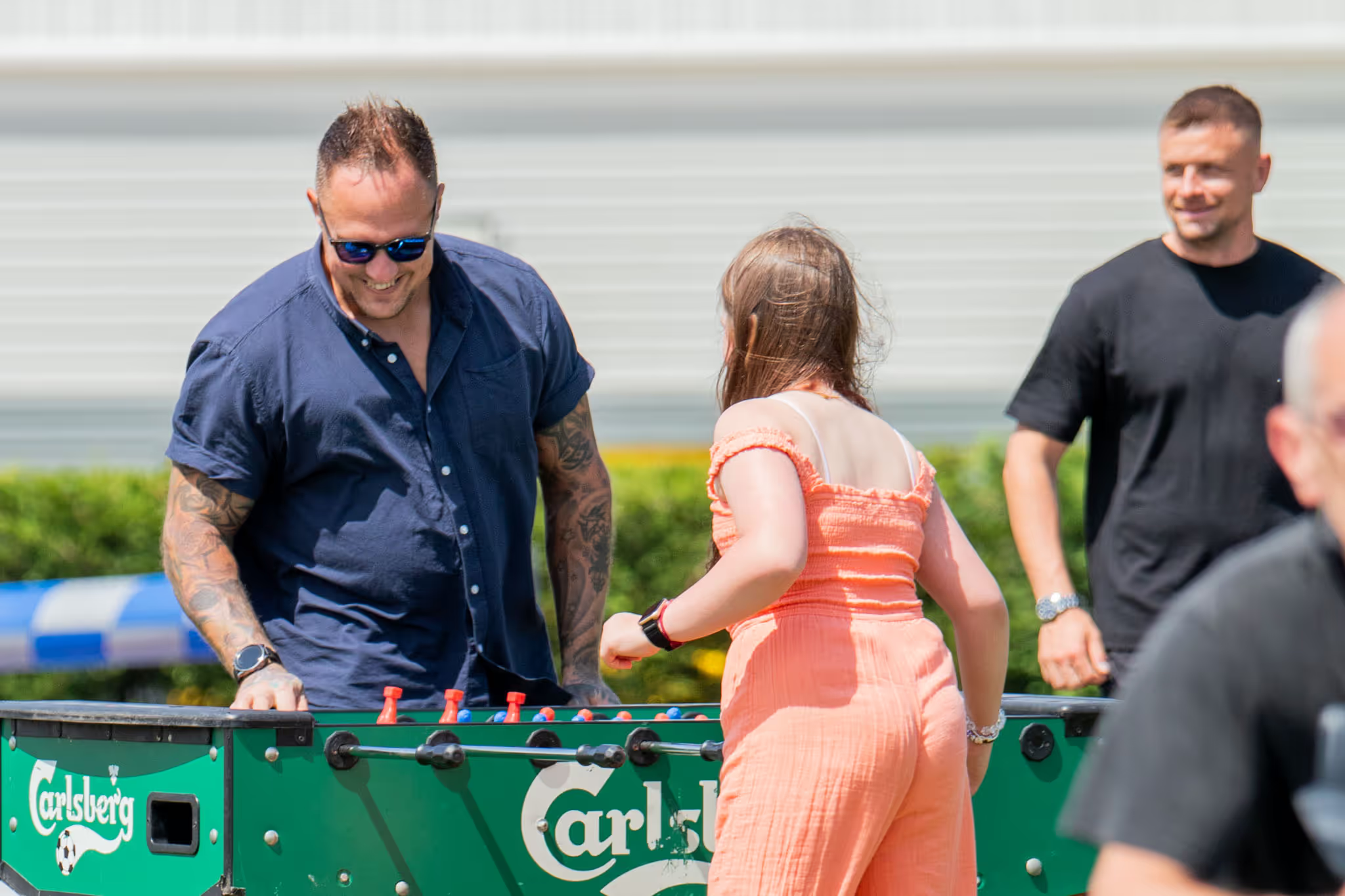
Check the ground and the weather plan first. If the day moves indoors, a marquee or a large room can host smaller table games instead.
Do you need a quiet space or a film?
Yes, if you have younger children. A quiet space is the most underrated piece of wedding entertainment for kids, because a tired child is also an unhappy one.
Set aside a side room or a corner with cushions, blankets and a screen for a film. An outdoor tent can work too, with inflatable seating, blankets, heaters, fairy lights and a projector, as in the photo below.
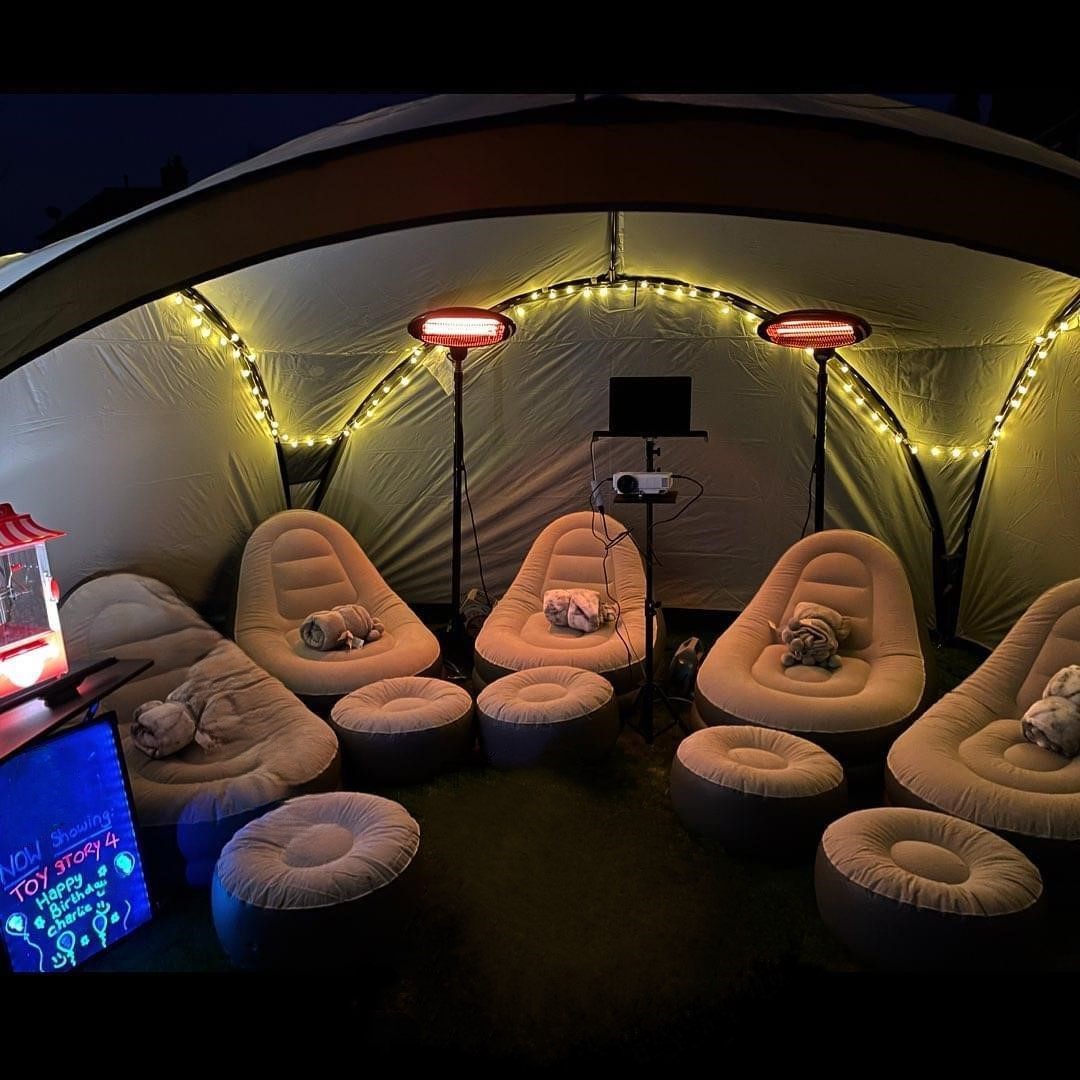
Pick something short and familiar, and keep the sound low enough that the main party isn’t affected. Tell parents where it is, so they know where to find sleepy children.
Should you hire a supplier or do it yourself?
DIY is fine for small numbers of children and quiet activities. Hire a supplier when there are lots of children, a wide age range, or a large outdoor space to fill.
The practical test is supervision. Someone has to run the games, and it shouldn’t be the bride’s cousin or a parent who’d rather be at the party. A professional host also brings the kit, sets up and clears down. We plan and deliver weddings, so ask us what we can provide for the children’s entertainment.
Ask any supplier about:
- Safeguarding and insurance (get confirmation in writing)
- How many children they can manage at once
- Space and power they need
- A wet-weather plan
Plan your wedding entertainment for kids
Start with the guest list: how many children, what ages, and where they’ll spend the day. Then pick one activity for each of the ceremony, the meal and the evening, plus a quiet space. That covers most weddings.
Tell us about your event and we’ll put together a tailored proposal. Send us your details and we’ll reply within one business day.
FAQs
What entertainment can you have at a wedding for children?
Colouring packs, sticker books and scavenger hunts suit a kids’ table. Lawn games and giant games work outdoors. Face painters, magicians and balloon modellers are popular hired acts. A film in a quiet corner suits the evening. Mix quiet and active options, and match them to the ages of the children coming.
What are some fun activities for toddlers at a wedding?
Toddlers need simple, safe, short activities: chunky crayons, stickers, soft toys, bubbles and a quiet corner with blankets. Keep small parts away from under-threes. They tire quickly, so a space where parents can settle them for a nap matters as much as any activity.
Should I have kids at my wedding?
It’s your call, and both choices are fine. Inviting children makes it easier for family with young kids to attend, but it adds noise and planning. If you do, plan their day properly: seating, food, activities and a quiet space. If you don’t, tell guests early so they can arrange childcare.
When should children’s wedding entertainment start?
Start where the gaps are. Hand out activity packs before the ceremony, keep the kids’ table busy during the meal and speeches, then run bigger games or a film once the formal parts are over. Waiting until children are already bored makes everything harder.