What Does an Event Management Company Do?

Been asked to sort the away day and wondering what an event management company does? It plans, coordinates and runs the event from first brief to final pack-down, so you do not chase every supplier yourself. That means one team turns a one-line request into a venue, a programme, equipment, a host and a day that runs to time.
(If you are here for careers or courses, jump to the FAQs for a pointer. The rest of this guide is for people buying the service.)
What does an event management company do?
It takes ownership of the detail across three stages: before the event, on the day and afterwards. The aim is that one team is responsible for all the moving parts, rather than you holding a dozen separate email threads.
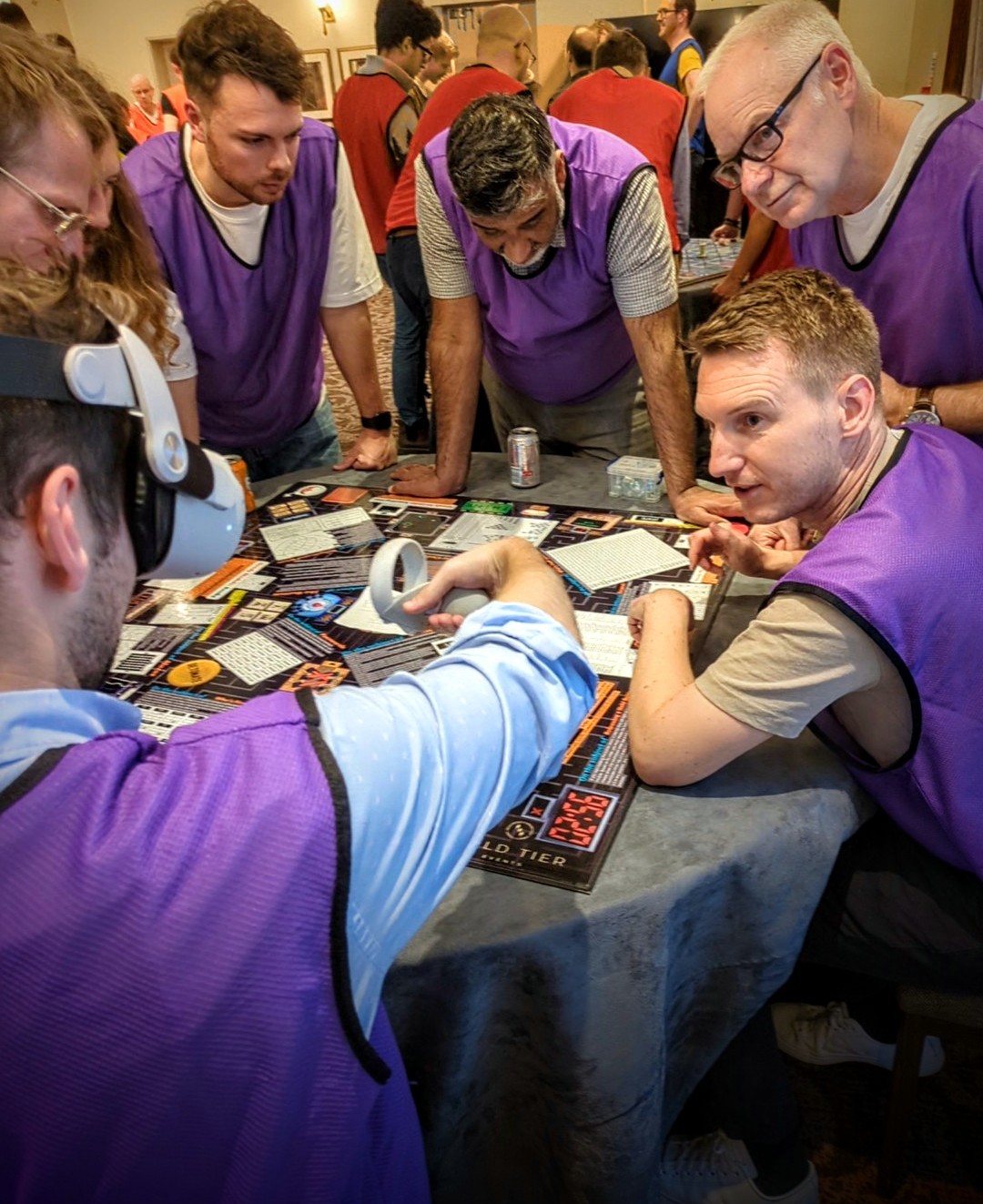
Before the event
This is where most of the work happens, and most of it is invisible to you.
- Brief and concept: agreeing the purpose, group size, date and the kind of day your people will enjoy.
- Budget: shaping the plan around what you have to spend.
- Venue finding: shortlisting venues that suit the group and the activities (Gold Tier includes this free with corporate events).
- Suppliers: booking entertainment, catering, transport and AV, and confirming each one.
- Timeline and risk: a schedule working back from the date, plus checks on access, space, power and any permissions the venue needs.
On the day
Setup happens before your guests arrive. A host keeps the running order moving, the AV works, and someone deals with the late delivery or the missing extension lead so you can talk to your colleagues. When it ends, the team breaks everything down and clears the space.
Howdens put it simply: “Gold Tier arrived at the exact time they said they would, they set everything up ready for the start of our event.”
After the event
Wrap-up is the least glamorous part. It covers closing out supplier payments, collecting feedback and noting what to change next time.
Which services can you expect?
Expect planning and coordination as the backbone, with the rest depending on the event. For Gold Tier, the event management service covers end-to-end planning, venue sourcing, entertainment, catering and transport coordination.
Our corporate events, for groups from “20 people or 2000”, include:
- full event planning and coordination
- a curated mix of interactive experiences
- setup, breakdown and all equipment provided
- professional hosts
- a free venue finding service as standard
- custom branding and theming, if you want it
Other agencies will package things differently, so check what is in and what is extra.
Organiser vs agency: who does what?
You stay the decision-maker; the agency takes on the legwork. Here is a realistic split.
| Task | You | Event management company |
|---|---|---|
| Say what the event is for and who is coming | Yes | Asks the questions and shapes it |
| Approve the budget | Yes | Plans within it |
| Shortlist venues | Signs off | Finds and shortlists |
| Book entertainment, catering, transport | Approves | Books and confirms |
| Guest list and invitations | Usually you | Advises |
| Setup and breakdown | No | Yes |
| Running the day | Enjoy it | Host and team |
| Supplier payments and wrap-up | Approves | Coordinates |
Even with an agency, you will still need to supply the guest list, internal sign-offs and any dietary or access needs.
Event management company vs event planner vs in-house
The terms overlap, and the real difference is scale and who delivers. An event planner often focuses on the planning stage, such as the design, budget and suppliers. An event management company often also delivers on site, with its own team and equipment. In-house means you or a colleague do it all, which suits small, repeat events.
“Event manager” can also mean a person: the individual running your event, or a job title if you are thinking about a career.
When is it worth hiring one?
It is worth it when the cost of things going wrong is higher than the cost of help. Typical signs:
- You have more than one supplier or activity to coordinate.
- The group is large, or the event is for clients or senior people.
- The event is on top of your normal job and nobody has time to chase.
- You want interactive entertainment or equipment, which needs setting up and running.
You probably do not need one for a small gathering in one venue, with a simple meal and no entertainment. Booking the room yourself is fine there.
How to brief and choose one
A clear brief gets you a better proposal and a fairer comparison. Have these ready before you call:
- The purpose of the event and who is attending
- The date, or a few options, and the likely group size
- A budget, or at least a range
- Location preferences, or whether you want help finding a venue
- Any access, dietary or inclusion needs
- Who signs it off, and by when
Then ask:
- Who will be on site on the day?
- What is included, and what is extra?
- Can you show me events like mine?
- What happens if a supplier drops out?
Be wary of vague proposals and anything that does not say who is accountable on the day.
How Gold Tier approaches it
We plan and deliver corporate events, team building, conferences, brand activations and trade shows, private parties and weddings, across the UK, including conferences. Our event management service sits behind our corporate events, so one supplier can look after the whole day.
Laravel Live’s CTO said of an after-conference social: “They worked with us to understand and implement our requirements, and executed everything professionally and on time.”
FAQs
What are the 5 C’s of an event?
The 5 C’s are a framework often used in event management guides: concept, coordination, control, culmination and closeout. In plain terms, that is deciding what the event is for, organising the logistics, keeping people and suppliers on track, running the day, then wrapping up feedback and payments. It is one common version, and the detail varies by author.
What are the 7 elements of event organisation?
There is no single agreed list of seven, and guides vary. Most cover the same ground: purpose, budget, date and venue, suppliers, programme, promotion or invitations, and evaluation afterwards. You do not need to memorise a framework: if you can answer who it is for, what it costs, where and when it happens, and what happens on the day, you have the core of it.
What skills does an event manager need?
Mostly organisation, supplier management and staying calm when something changes at short notice. From the client’s side, you see it as a clear timeline, suppliers who turn up when they said they would, and problems solved before you hear about them.
How much does event management get paid?
That is a careers question rather than a buying one. The National Careers Service events manager profile gives typical salaries of about £23,000 a year for starters and £40,000 for experienced events managers, plus routes into the role. Check the page for current figures.
Do I still need an event management company if I already have a venue?
Often, yes. A venue gives you a room, not the entertainment, equipment, running order, host or suppliers. If the day is a simple meal in one room, you may not need help. If you want activities, branding, AV or several suppliers to arrive on time, someone has to coordinate them.
Tell us about your event and we’ll put together a tailored proposal. Start your enquiry and we’ll reply within one business day.