Conference Icebreakers: 10 Ideas for Rooms of Any Size
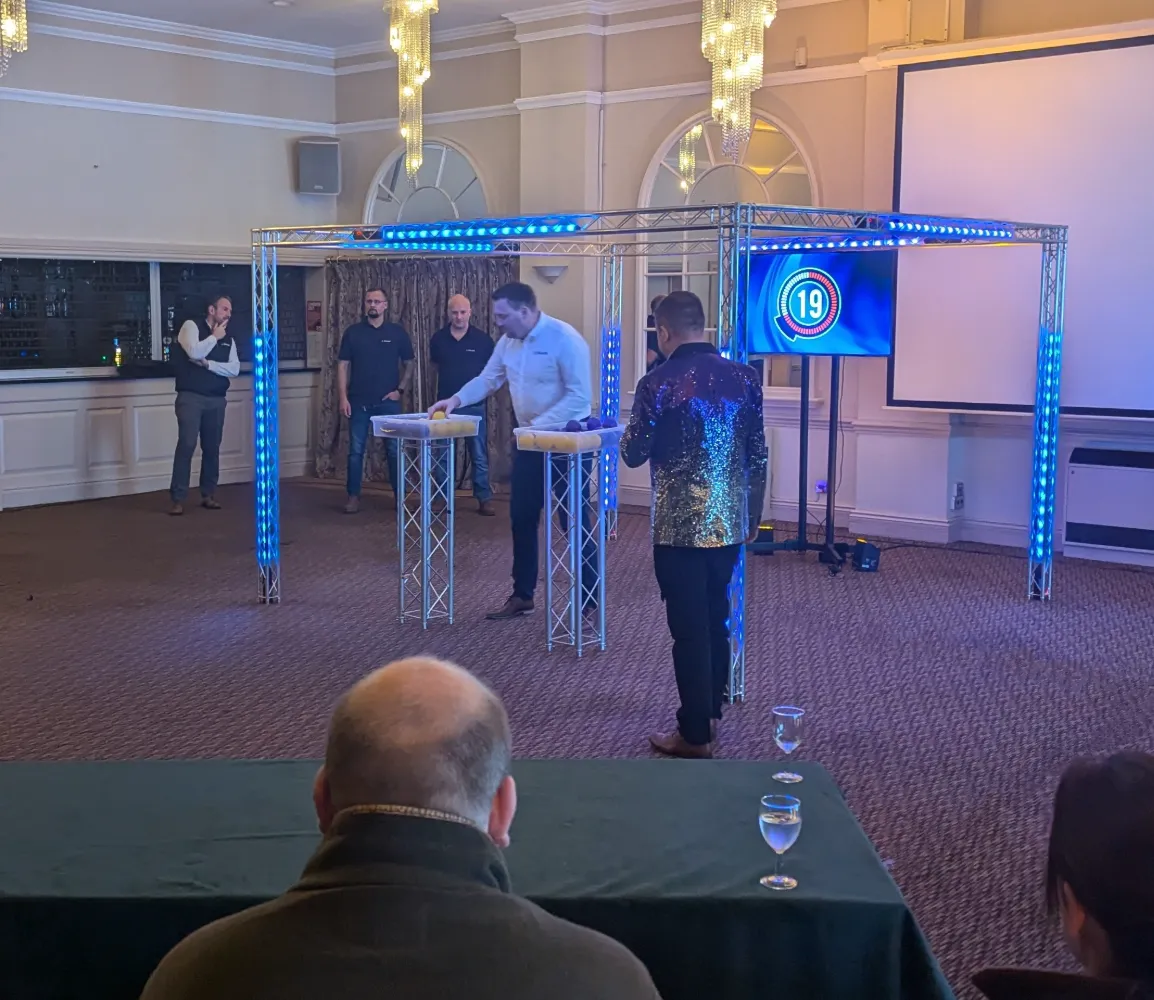
Someone has asked you to open the conference, and the room is full of people who mostly do not know each other. A good icebreaker is short, feels optional and gives strangers an easy reason to talk. The right one depends on your time slot, your room size and whether people are sitting in rows or at tables.
Below are 10 conference icebreakers grouped by time, plus a chooser table and the pitfalls to avoid.
What makes conference icebreakers work (and why do they fall flat)?
A conference icebreaker works when it gives people a simple task and a partner, asks for nothing personal, and ends before the energy drops. It falls flat when it is long, forced or only suits the loudest people in the room.
The same few mistakes come up again and again:
- Forced sharing. Asking everyone to reveal a “fun fact” in front of a hall makes shy people dread the start of the day.
- Passing the microphone in a big room. It is slow, and most of the audience waits and watches.
- Eating the schedule. A 20-minute opener that was meant to take 10 puts every speaker behind.
- Excluding people. Anything that needs standing, running or fast reading leaves some attendees out.
How do you choose a conference icebreaker?
Choose by time slot first, then by room size and seating. Short slots suit simple pair prompts. Round tables suit team challenges. Theatre seating suits whole-room formats with a host.
| Time slot | Room size | Seating | Good fit |
|---|---|---|---|
| 5 minutes or less | Any | Theatre or tables | Pair-and-share prompt, live poll, networking bingo |
| 15 minutes | 20 to 200 | Round tables | Table quiz round, Taskmaster-style challenge |
| 30 minutes or more | 20 to 500 | Tables or open floor | Tablet treasure hunt, team-building in a box, AI Robot Wars |
| 30 minutes or more | Large rooms | Theatre or tables | Hosted game show, The Betrayers-style game |
| Drop-in during a break | Varies | Foyer or open space | Arcade games, VR stations |
Quick icebreakers (5 minutes or less)
These need no kit and no supplier.
Pair-and-share prompt
Ask people to turn to the person next to them and answer one prompt in 60 seconds each. Good prompts have a shared context, such as “What is one thing you hope to take away from today?” or “What is the best session you have ever attended, and why?” Show the prompt on a slide.
Live poll or show of hands
A show of hands is the gentlest icebreaker there is. Ask quick-fire questions: who travelled furthest, who has a first-time-here badge, who is already on their third coffee. A phone poll with results on screen works better in large rooms and gives quieter people a way in.
Networking bingo
Give each attendee a card with squares such as “has changed job this year” or “works in a different country”. The goal is to find a different person for each square. It suits a foyer or arrival slot, because no one has to go first.
Table and room icebreakers (15 to 30 minutes)
These need a bit more setup, but they turn a room of tables into teams. Each one gives people a task to share, so conversation comes naturally.
Table quiz round
Ten questions and one answer sheet per table is enough. Each table has to agree on answers, so everyone speaks. Keep questions light and show a scoreboard on screen.
Taskmaster-style challenge
Set each table a daft, tightly timed task, such as building the tallest tower from what is on the table. Judge them live. Our Game Shows & Quizzes format includes Taskmaster-style challenges and Cube challenges, with company-themed customisation and setup included, so the host and kit arrive ready.
Tablet treasure hunt
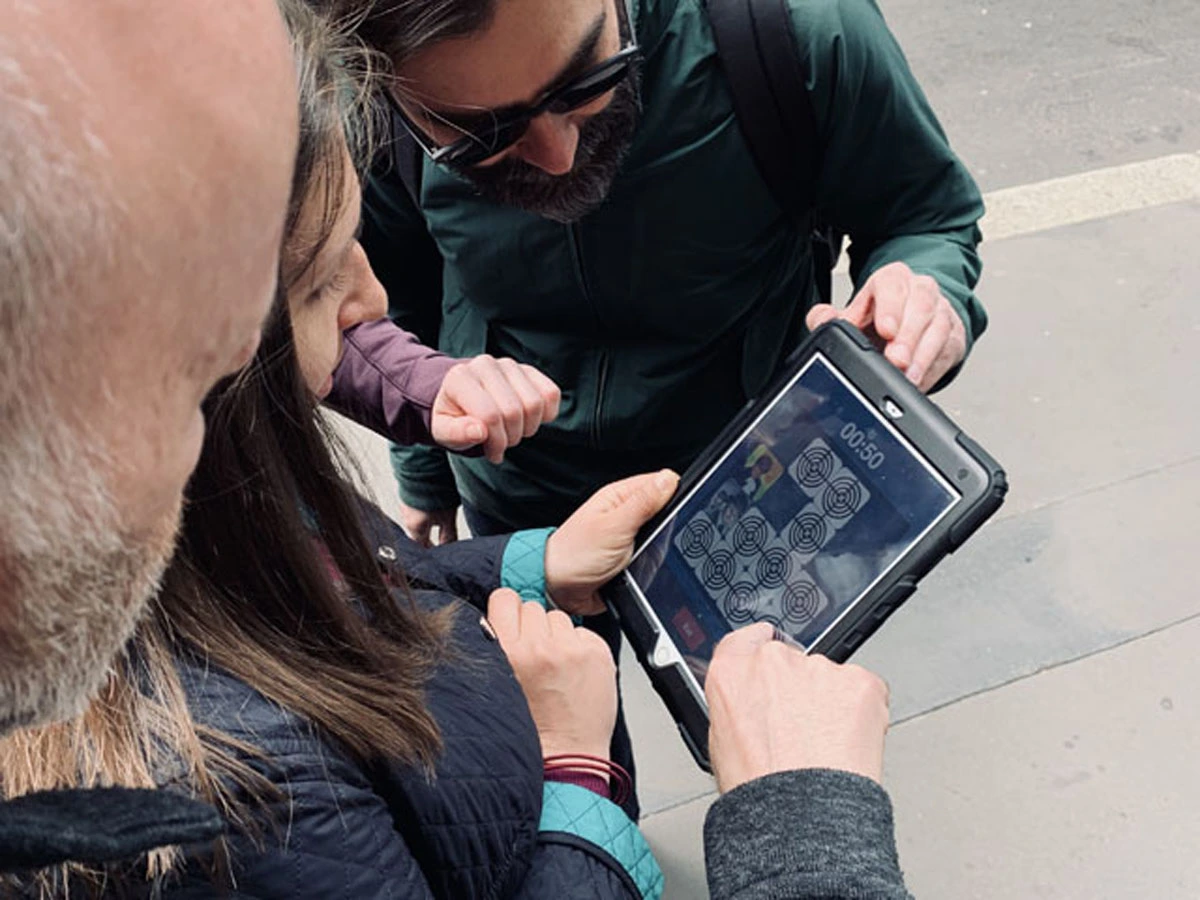
Teams use tablets to complete geotagged challenges, and the winning team gets prizes. It is an outdoor format, so it suits a conference with a free hour and somewhere to walk. See our tablet treasure hunt.
Team-building in a box
Our indoor team-building range includes CSI Investigation, Paint Pad Pro and Escape Room in a Box, and runs from 10 to 100+ people. These work well when a larger conference splits into groups, because each group has a self-contained task. They sit between an icebreaker and a breakout, so look at conference breakout activities if you want something that fits inside the programme.
Hosted and tech-led openers for big rooms
For rooms of 100 or more, a host and a single shared format beat any DIY activity. A professional presenter controls the pace, so no one is left waiting for a microphone.
Game show format
A game show round turns a theatre or banqueting layout into a competition.

Our game shows and quizzes include quizzes, bingo, Cube challenges and Taskmaster-style tasks. They suit a post-conference or end-of-day social as well as an opener. One client put it this way:
“We used Gold Tier Events for an after-conference social with 250+ guests, and I cannot say enough good things about Reece and his crew. They worked with us to understand and implement our requirements, and executed everything professionally and on time. From start to finish, everything was handled perfectly.” Jonathan Behr, CTO / VP of Engineering, Laravel Live
That was an after-conference social (more on that in our conference evening entertainment ideas), but the hosted approach works earlier in the day too.
AI Robot Wars, VR and arcade games
AI Robot Wars and VR suit a bigger slot, while arcade games suit a coffee break. The AI & Metaverse Experience Arcade supports 1 to 50 VR headsets for groups of 10 to 1,000 and is beginner friendly. AI Robot Wars runs in teams of 6 to 12, up to 500 participants, and needs no AI, robotics, coding or VR experience.
For a break, our arcade games come in a free-flow, drop-in format: retro arcade, air hockey, table football and darts. Attendees can join in when they arrive or between sessions. All of these give strangers something to talk about.
The Betrayers-style game
The Betrayers is inspired by The Traitors. It adapts to the space and group size, from boardroom to conference hall, with a professional presenter and all AV included. It is a longer game than a pair prompt, so give it a proper slot rather than a five-minute starter, and ask us about timings.
Funny icebreakers without the cringe
Funny works when it is light, low-risk and optional. The aim is a shared laugh, not a joke at someone’s expense. Prompts that tend to land:
- What is the most useless thing you own?
- What would your walk-on music be?
- What is the strangest job you have had?
- Which film would be better with a sing-along?
- What is your hot take on pineapple on pizza?
Let people pass, and keep the questions about opinions and objects rather than personal history.
How do you make icebreakers inclusive?
Design every icebreaker so that someone who is seated, quiet, sober or new to the industry can take part fully. Offer a choice of how to join in.
- Mixed ability. Avoid tasks that depend on standing, speed or small print. Ask your supplier about seated options.
- Non-drinkers. Do not build an opener around alcohol.
- Introverts. Pair prompts and table tasks beat whole-room sharing.
- Neurodiverse attendees. Give clear instructions in advance, a visible timer and a way to opt out without explanation.
- Hybrid attendees. Give remote delegates the same prompt through chat or a poll.
Accessibility needs vary by person and venue, so confirm them with your supplier before the day rather than assuming a format will work for everyone.
How do you run an icebreaker to time?
Plan transitions as carefully as the activity. A host, a working microphone and a timer on screen are what keep a 10-minute opener at 10 minutes.
- Name one person in charge of time. A host from your team or a professional presenter.
- Test the AV the day before. Microphones, PA, projectors and screens are the usual failure points. Our audiovisual service covers microphones, PA, staging, projectors and screens, with on-site tech support.
- Give instructions once, clearly, on a slide as well as aloud.
- Allow two minutes between the icebreaker and the first speaker.
If you would rather not run any of this yourself, our team handles the host, setup, breakdown and equipment. See our conference event service or our wider team building offer.
FAQs
What is a good icebreaker topic?
Pick something low-stakes that everyone in the room can answer without thinking hard: the best thing they ate this week, a skill they would swap with a colleague, or what they would put on a conference lanyard. Avoid anything personal, political or competitive. The topic should give strangers an easy first sentence, not a reason to feel exposed.
What is a good 15-minute icebreaker activity?
A table quiz round or a Taskmaster-style challenge works well. Each table becomes a team, gets one clear task and a visible timer, and the whole room finishes together. Fifteen minutes is long enough for strangers to start collaborating but short enough to stay inside the agenda. See the table and room section above for the detail.
What are 5 funny icebreaker questions for work?
Try these: What is the most useless thing you own? Which film would be better with a sing-along? What would your walk-on music be? What is the strangest job you have had? What is your hot take on pineapple on pizza? Keep them optional, and let people pass without explaining why.
What is a conference icebreaker, and how is it different from an energiser?
An icebreaker helps people who do not know each other start talking, so it usually comes at the opening or in a networking slot. An energiser is a quick burst of movement or fun to lift a flat room, often after lunch. The same activity can do both, but the goal differs: connection versus energy.
How long should a conference icebreaker be?
Match it to the slot. Use five minutes or less for a theatre-style opener, around 15 minutes for table-based activities, and 30 minutes or more only when it replaces a networking break rather than eating into the programme. If you are unsure, run it shorter. People rarely complain that an icebreaker ended too soon.
Are virtual conference icebreakers different?
Yes, mainly in format. Live polls, a chat prompt and short breakout pairs replace table challenges, and everything needs a clear time limit and a host to keep it moving. Cameras-off attendees should have a way to take part, such as typing an answer in chat. Keep the activity under ten minutes.
Tell us about your event and we’ll put together a tailored proposal. Send us your enquiry and we’ll reply within one business day.