Networking Event Ideas: 11 Formats That Get People Talking
You have been asked to run a networking evening. Left to chance, colleagues cluster together and strangers stare at their phones. The best networking event ideas fix this by giving guests a shared activity and a reason to rotate, rather than telling them to “mingle”. Pick by group size, room and how well your guests already know each other.
This guide covers 11 formats, from free icebreakers to hosted and tech-led activities we run for corporate groups. For each, we say who it suits and what space it needs.
What makes a networking event work
A networking event works when guests have a clear reason to talk to someone new. Four things matter most: a goal, mixed groups, sensible timing and a host.
- A goal. Decide whether this is about new client contacts, cross-team relationships or industry peers meeting. The goal decides the format. Client events often suit lighter, more social formats than internal ones.
- Mixed groups. People talk to who they know. Split colleagues up with coloured wristbands, team allocations or table assignments so mixing is built in.
- Timing. Aim to keep any structured segment to 20 to 45 minutes. After that, let people drift. Structure is the starter, not the whole meal.
- A host. Someone has to explain the rules, keep energy up and make the quiet corners feel included. A professional presenter takes this off your plate.
How to choose a networking format
Choose by group size and room first, then by how structured you want the evening to feel. Use this table as a starting point.
| Format | Suggested group size | Space | Energy | Best for |
|---|---|---|---|---|
| Speed networking | 10 to 100 | Tables or chairs in pairs | Medium | Industry peers, meetups |
| Human bingo | 15 to 200 | Open floor | Low to medium | Opening any event |
| Indoor team building (CSI, Escape Room in a Box) | 10 to 100+ | Room for small teams | Medium to high | Internal cross-team days |
| VR Escape Room | Teams of 4 to 10, up to 500 | About 2 x 2 m per team (a table) | High | Large groups, tech-curious crowds |
| AI Robot Wars | Teams of 6 to 12, up to 500 | Tailored to the space | High | Large groups needing a talking point |
| Tablet Treasure Hunt | Teams | Outdoors | Medium to high | Away days, daytime events |
| Game shows and quizzes | Most group sizes | Seated room with a play area | Medium to high | Post-conference or end-of-day socials |
| The Betrayers | Adapted from boardroom to conference hall | Seated tables | Medium, playful | Evenings, groups who know a little of each other |
| Arcade games | Drop-in | Open floor | Low to medium | Free-flow client mixers |
| Driving simulators | 1 to 16 simulators | Open floor | Medium | Drop-in socials, brand-led events |
Quick icebreakers (free and short)
Icebreakers cost nothing and take 10 to 20 minutes. They suit the start of an event, but they will not carry a whole evening.
- Speed networking. Guests sit in pairs and swap every three to five minutes. Give each pair a prompt, such as “what is the best thing you have worked on this year?”, so nobody freezes.
- Human bingo or business card bingo. Each guest gets a grid of descriptions (“has changed career”, “speaks three languages”) and collects a different name for each square. It forces everyone to approach strangers with a ready-made question.
- Two truths and a lie. Works in small tables of six to eight. It reveals personality faster than job titles do.
Keep these light. If your group is above about 50 people, or you need the evening to run itself, move to a team-based or hosted format.
Team-based formats
Team-based formats work because people talk to solve a problem together, so there is no need to make small talk. They suit internal cross-team events and client days where you want strangers to cooperate. Our team building events cover the full range.
Indoor team building
Our indoor team building ranges from 10 to 100+ people. Options include a CSI Investigation, Paint Pad Pro, Escape Room in a Box and arcade stations. Teams share clues and debate answers, which is networking disguised as a puzzle.
VR Escape Room
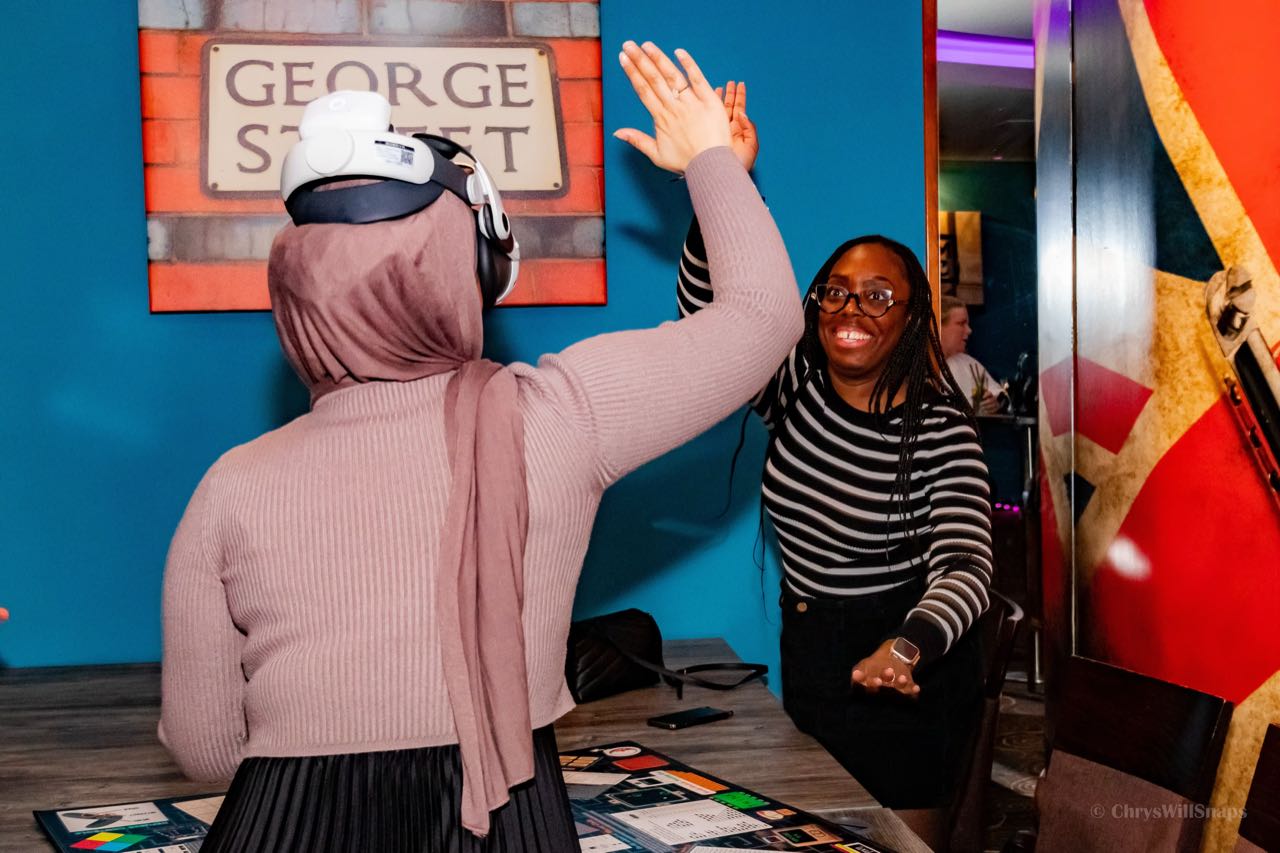
Our VR Escape Room puts teams of 4 to 10 to work together, with one player in a headset while teammates work from the manual. It runs for up to 500 participants and needs about 2 x 2 m per team, essentially a table. No one needs VR experience. This is a good choice if you want a high-energy format that suits a big mixed room.
AI Robot Wars
In AI Robot Wars, teams of 6 to 12 steer robots in an arena tailored to the space, from a giant race track to a small arena. It runs for up to 500 participants and no AI, robotics, coding or VR experience is needed. An arena in the room also gives non-players something to watch and comment on.
Tablet Treasure Hunt
In the Tablet Treasure Hunt, teams complete geotagged outdoor challenges on tablets, with prizes for the winning team. It suits daytime away days and cross-team networking when you want people outside the office and moving.
Hosted formats
Hosted formats suit rooms where guests are seated and want a clear structure. A professional presenter does the heavy lifting, so you can focus on meeting your own guests.

Game shows and quizzes
We run game shows and quizzes, including Taskmaster-style challenges, Cube challenges and bingo, with company-themed customisation and setup included. They suit post-conference or end-of-day socials. Give each table a mix of departments or companies, and the quiz does the introducing.
The Betrayers
The Betrayers is inspired by the TV show The Traitors. It adapts to the space and group size, from boardroom to conference hall, and comes with a professional presenter and all AV. Guests spend the evening talking, watching and deciding who to trust, so conversation comes naturally.

Drop-in and free-flow formats
Free-flow activities suit guests who dislike structured games. People drift in and out, play for a few minutes, and chat while they wait for a turn.
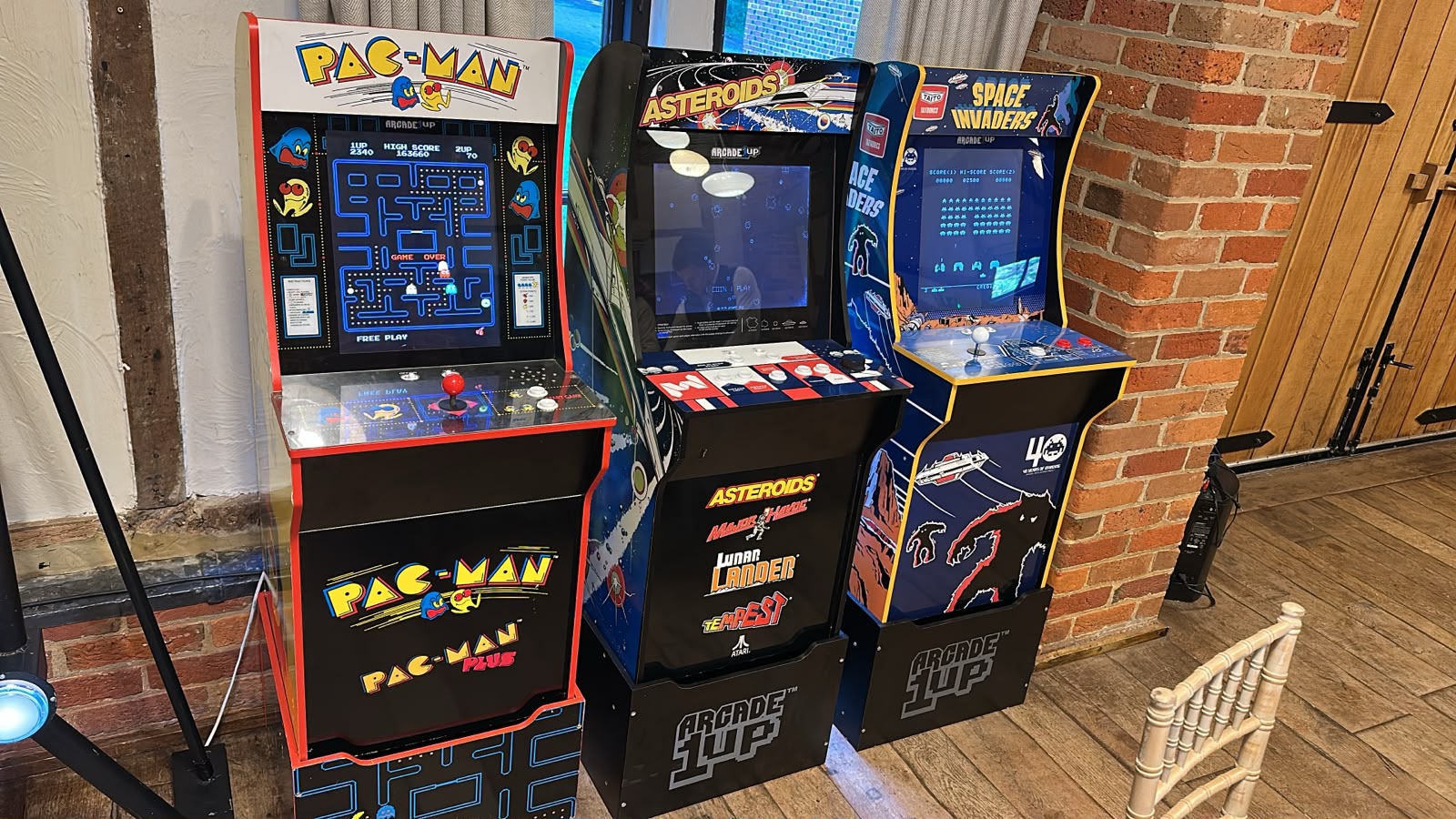
- Arcade games. Our arcade games cover retro arcade (Street Fighter, Pong, Pac-Man), air hockey, table football, darts, shuffleboard and beer pong, all in a drop-in format. They work well at client mixers where you do not want to herd people into teams.
- Driving simulators. We provide 1 to 16 driving simulators with 55-inch screens and force-feedback wheels, with optional VR headsets and custom branding. Spectators can comment, competitors can compare results, and brand-led events get a talking point.
Free-flow formats work best when the room is big enough for guests to move around. If you only have a small room, a seated hosted format will fill the space better.
Networking event ideas for conferences
At a conference, networking happens in the gaps: coffee breaks, lunch and the evening social. The most effective approach is to design the post-session social as a hosted or free-flow activity rather than leaving people to find their own entertainment.
We run conference socials as part of our conference events and delivered post-conference entertainment for 300 guests at Laravel Live. As their CTO / VP of Engineering, Jonathan Behr, said: “We used Gold Tier Events for an after-conference social with 250+ guests, and I cannot say enough good things about Reece and his crew.” For more, see our guide to conference evening entertainment ideas.
Other conference tips:
- Run one free-flow zone in the main hall so attendees can step out of a session and chat.
- Use a game show or quiz as a closing session so delegates leave with a shared memory.
- Mix speakers and delegates at tables so the conversation is not limited to peers.
Ideas by audience
Young professionals
Activity-led socials can suit newer professionals, who may not yet have a wide network. Arcade games, team challenges and VR give guests something to do with their hands, which lowers the pressure of starting a conversation.
Small groups
For groups under about 30, choose formats where everyone takes part: Escape Room in a Box, a CSI Investigation, speed networking in pairs or a boardroom-sized Betrayers game. With a small group, guests will notice anyone who is left out, so avoid formats that depend on a crowd to feel lively.
Virtual and hybrid
We deliver events across the UK, and this guide focuses on in-person formats. If you must include remote attendees, keep virtual networking short, pair people one to one, and give each pair a specific prompt. Long, open video calls tend to work less well.
Include everyone
A good networking event works for introverts, non-drinkers and guests with different needs. Plan for this up front rather than adding it later.
- Shy guests. Give them a role or a task. Team games and quizzes let quiet guests contribute without cold-approaching strangers.
- Non-drinkers. Do not centre the evening on the bar. Activity-led formats give people something to do other than hold a drink, and make sure there are good soft drinks on offer.
- Mixed abilities. Choose activities that need no prior experience. Our VR Escape Room and AI Robot Wars both need none. Confirm any access needs with your supplier before you book.
- Neurodiversity. Avoid loud surprises, offer a quieter space and share the running order in advance. Check specific needs with your supplier and your guests.
Planning notes
Get these details right and the format will do the rest.
- Timing. Start the structured part within 30 minutes of doors opening, while energy is high. End with a free-flow period so people can continue conversations.
- Room. Check space against the format. Team tables need floor space and free-flow zones need room to move.
- Noise. Arcade and simulator zones are lively. Keep them away from any area you want to use for quieter conversation or speeches.
- AV. Hosted formats need a microphone, screens and sound. We handle setup, breakdown and all equipment.
- Branding. Custom branding and theming are available, so your sponsor or company look can run through the evening.
- Venue. If you do not have a venue yet, we offer a free venue finding service as standard with corporate events.
FAQs
What are some good networking activities?
The best activities give guests a shared task and a reason to move around. Quick icebreakers such as speed networking or human bingo work for short slots. Team games, hosted game shows and free-flow stations like arcade games work for longer evenings, because people talk about what they are doing rather than being told to mingle.
What are some examples of networking events?
Common examples include industry mixers, post-conference socials, client evenings, speed networking sessions, cross-team internal days and team-building afternoons. Some are formal and structured, others are drop-in. The format you choose should match how well guests already know each other and how long they have.
What should I do at a networking event?
Decide on one or two people or topics you want to meet before you arrive. Ask open questions rather than yes-or-no ones, and use any activity on offer as an easy way in. Leave a conversation politely after ten minutes or so, and follow up the next day while the chat is fresh.
What are some types of networking events?
Networking events can be formal or social, hosted or free-flow, and internal or client-facing. A seated, hosted quiz suits guests who prefer structure. A drop-in arcade corner suits people who like to float. Internal cross-team events usually need more mixing prompts than client events.
Plan your networking event with us
Tell us about your event and we’ll put together a tailored proposal. Send us your enquiry and we will reply within one business day.