Team Building Activities for Introverts: 10 Ideas That Work
Your away day is booked, and a few of your quieter colleagues are dreading it. The best team building activities for introverts share a pattern. They use small teams, a task to focus on, a clear role for everyone and no spotlight. Introverts rarely dislike team building itself; they dislike being put on the spot, made to perform, or having no way out.
Below are ten formats we run that fit that pattern, plus a practical guide to planning the day so quiet colleagues enjoy it.
What do introverts actually find hard about team building?
Most of it comes down to pressure rather than people. The usual pain points are being asked to speak in front of the whole group, surprise networking with strangers, constant noise, and a schedule with no breaks.
None of this means introverts are shy or unsociable. Plenty enjoy working closely with a small group on a shared problem. They just prefer to join in on their own terms, so it is the format you need to get right, not the person.
What makes a team activity introvert-friendly?
An introvert-friendly activity gives people something to do rather than something to say. Five design features matter most:
- Small teams. Groups of four to twelve let everyone contribute without competing for airtime.
- A task in the middle. When the group is focused on a puzzle or challenge, conversation happens naturally around it.
- Defined roles. Knowing your job (reader, builder, navigator) removes the “what should I be doing?” anxiety.
- No spotlight. Nobody is asked to perform alone in front of the room.
- Easy in, easy out. Drop-in formats and optional elements let people join at their own pace and step away without fuss.
Use these as a checklist when you compare options, including ones from other suppliers.
10 team building activities for introverts
These are our editorial picks, not guarantees. Every group is different, so treat the notes on who each format suits as a starting point and talk to your supplier about your mix of people.
Task-focused team games
1. Escape Room in a Box. Teams solve an escape-room-style challenge together, so the group’s attention is on the puzzle rather than on each other. It is easy to contribute without leading. It is part of our indoor team building range, which runs from 10 to 100+ people.
2. CSI Investigation. Colleagues examine a staged crime scene and piece together clues. Careful observation pays off, which suits people who prefer to think before speaking.

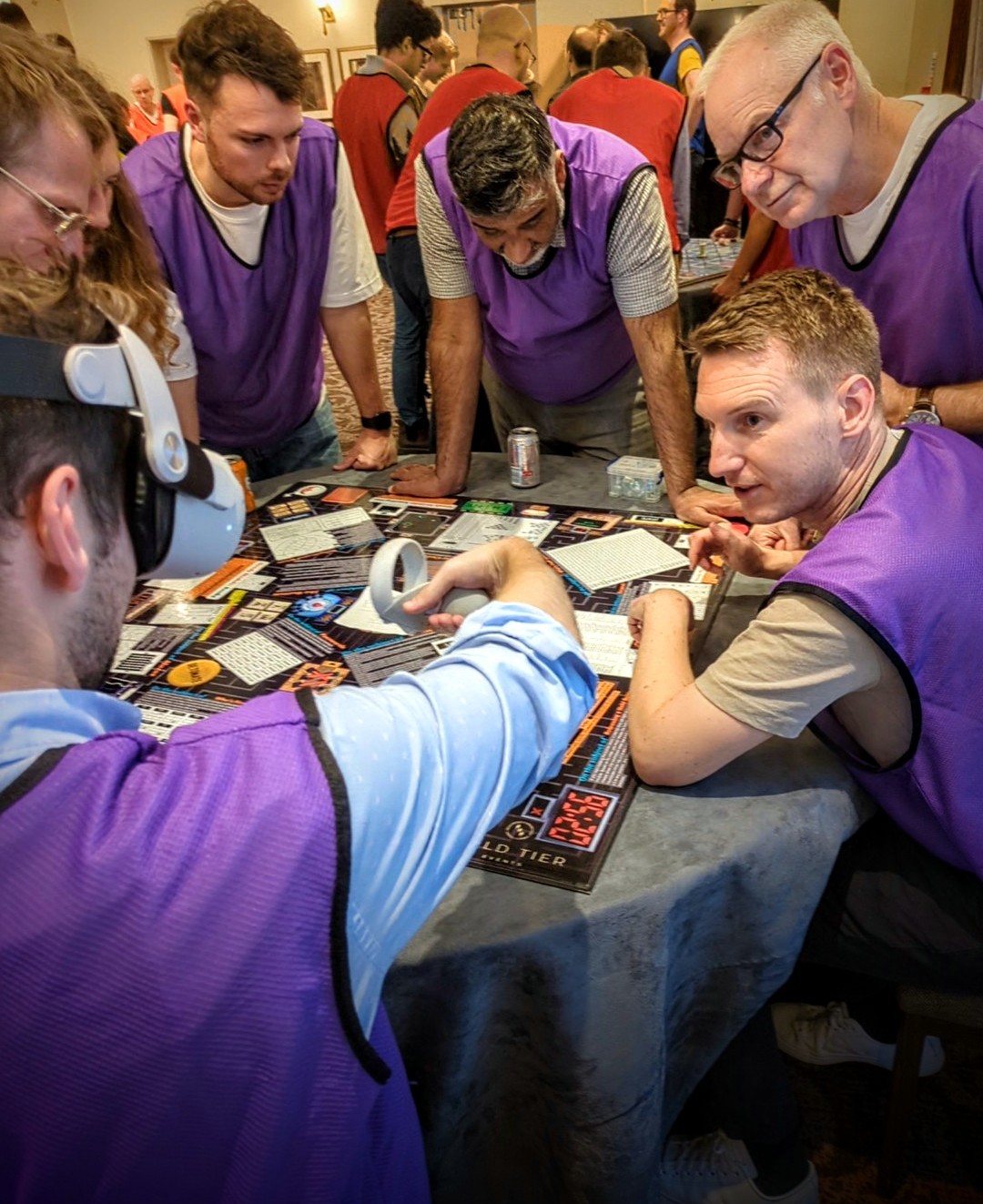
3. VR Escape Room. Teams of 4 to 10 solve the challenge together. In our photos, one player wears the headset while teammates read the manual and study the clues. No VR experience is needed, and each team needs only about 2 x 2 m (a table), so the focus stays on the team’s puzzle rather than on any one person. Read more on our VR Escape Room page.
4. Tablet Treasure Hunt. Outdoor, geotagged challenges on tablets, with prizes for the winning team. Teams wander and solve together, which is a gentler way to spend time with colleagues than a seated social.
Problem-solving with a clear role
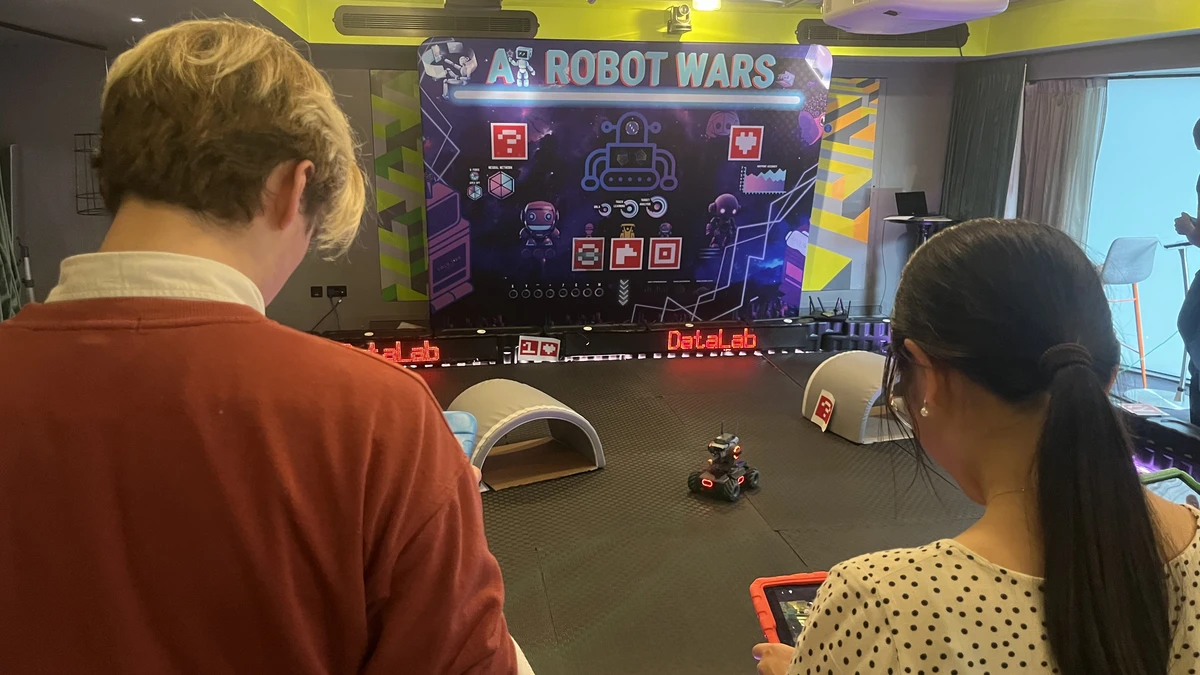
5. AI Robot Wars. Teams of 6 to 12 steer robots around an arena, and the format is tailored to the space. No AI, robotics, coding or VR experience is needed. Players steer the robots from tablets, so there is a hands-on job to do that has nothing to do with being the loudest person.
6. Taskmaster-style challenges and quizzes. Our game shows and quizzes include Taskmaster-style challenges, Cube challenges, quizzes and bingo. Team formats work best here. A team quiz lets quieter people contribute answers without having to take the stage.
Low-pressure and drop-in
7. Free-flow arcade. Retro arcade games, air hockey, table football and darts in a drop-in format. Nobody is scheduled, so people play when they feel like it and drift away when they don’t. See our arcade games.
8. Paint Pad Pro and arcade stations. Both sit in our indoor team building range. Ask us how each one runs, so you can judge how much talking it involves and whether it suits your quieter colleagues.
9. AI and Metaverse arcade. From 1 to 50 VR headsets for groups of 10 to 1,000, with activities such as Robot Wars, Metaverse Sports and Reaction Machines. It is beginner friendly, which helps anyone who dislikes feeling out of their depth.
A discussion-heavy format, with an honest caveat
10. The Betrayers. Our take on the TV show The Traitors, adapted to your space from boardroom to conference hall, with a professional presenter and all AV included. It is built around discussion and persuasion, so it is the most talkative format here. Some introverts love the strategy; others will happily observe from the edge. Pair it with a quieter option so nobody feels trapped. Details are on our Betrayers page.

What about virtual teams?
Virtual formats can work if they let people think before they speak: written or chat-based quizzes, collaborative documents and puzzle-solving in breakout rooms of three or four. Avoid compulsory camera-on icebreakers and rapid-fire “go round the group” questions.
Quick comparison
| Format | Typical team size | Spotlight level |
|---|---|---|
| Escape Room in a Box / CSI | Teams (confirm size with us) | Low |
| VR Escape Room | 4-10 | Low (shared roles) |
| AI Robot Wars | 6-12 | Low |
| Quizzes and Taskmaster-style | Teams | Low to medium |
| Free-flow arcade | Drop-in | Very low |
| The Betrayers | Adapted to your group | High (discussion-led) |
Spotlight levels are our own editorial judgement, not measured results.
Is outdoor or indoor team building better for introverts?
Neither is better; it depends on the format. Indoors gives you controlled noise, seating and a quiet space to retreat to. Outdoors gives people room to wander in small groups, which many prefer to a crowded room.
If you go outdoors, favour paired or small-team challenges such as a treasure hunt over large, loud group games. Our outdoor team building range includes puzzle-style challenges and archery as well as louder group games such as tug of war, so choose accordingly.
How do you run it so quiet colleagues enjoy it?
Planning matters as much as the activity. Eight steps help:
- Make the loudest parts opt-in. Give people a genuine choice, with no pressure or commentary if they pass.
- Share the agenda in advance. Surprises are what people dread. Tell them what is happening, when it starts and when it ends.
- Use small, mixed teams. Mix departments, but keep teams small enough for everyone to contribute.
- Assign roles. A defined role gives people a reason to engage.
- Set an end time. Knowing when it finishes makes it easier to commit.
- Provide a quiet area. A separate room or corner where people can take a few minutes.
- Skip forced speeches. Avoid anything that makes one person address the room.
- Cater for everyone. Offer good non-alcoholic options and check dietary needs, so the social side does not centre on drinking.
If you have specific accessibility or neurodiversity needs in the group, tell your supplier early and confirm what can be adapted.
Which activities should you avoid or adapt?
Avoid forced icebreaker circles, karaoke, public presentations and any game that singles out individuals. If something is part of company tradition, make it optional or give it a small-team version.
How we’d plan it
We plan team building events across the UK. With our corporate events, professional hosts, setup, breakdown and all equipment are included, and we can mix formats so there is something for both the lively and the reserved. Tell us your group size and the sort of people you have, and we will suggest a combination.
Don’t just take our word for it. Diane Collins of Howdens said: “Gold Tier arrived at the exact time they said they would, they set everything up ready for the start of our event.”
FAQs
How do you get introverts involved in team building?
Make taking part easy and low-risk. Tell people the plan in advance, use small mixed teams, give everyone a defined role, and avoid anything that puts one person on the spot. Let people opt in to the loudest parts and have a quiet space to step away to.
What do introverts do for fun in a team setting?
Many prefer structured, focused activities where there is a task to concentrate on, such as puzzles, investigations or building something together. Conversation then happens around the task rather than being the task. It varies from person to person, so offer a choice of formats.
How do introverts recharge during a full-day event?
Build breaks into the schedule. A quiet room, a proper lunch away from the activity space, and a few unscheduled gaps let people take a few minutes alone. Make it clear that stepping out is fine and nobody needs to explain why.
Are virtual team building activities good for introverts?
Some are. Written or chat-based formats, such as quizzes and collaborative puzzles, give quieter people time to think before they contribute. Forced video-on icebreakers and rapid-fire group discussion can be just as uncomfortable online as in person, so design them with the same care.
Tell us about your event and we’ll put together a tailored proposal.