Traitors Team Building Game: How to Run One at Work

If your team can’t stop talking about The Traitors, you can bring the round table into the office. A Traitors team building game works well at work, and the format is simple. Give everyone a secret role, run short team missions, then hold a round table where the group votes one person out.
Keep eliminated players involved so nobody ends up on the sidelines. A session typically runs 60 to 90 minutes and needs nothing more than role cards, a few props and a confident host.
How a Traitors team building game works
The Traitors is a social-deduction game: a small group of secret Traitors tries to avoid detection while the majority, the Faithfuls, tries to work out who they are. In the TV show, players complete missions that build a prize pot, the Traitors quietly “murder” a Faithful overnight, and everyone meets at a round table to vote someone out (format summary).
For an office version, you keep the three parts that make it fun and drop the rest:
- Secret roles. Most people are Faithfuls; a few are Traitors.
- Missions. Short team tasks that give people something to do and something to be suspicious about.
- The round table. A timed discussion followed by a vote to banish one player.
The overnight “murder” is the part that rarely translates. A simple swap is for the Traitors to quietly tap one Faithful on the shoulder (or message the host) between rounds, so there is still a mystery without anyone feeling singled out.
What you need
A Traitors team building game works best with enough people that a Traitor can hide. As a rule of thumb, a dozen or more players gives the bluffing room to breathe; with fewer than that, suspicion lands too quickly.
You will need:
- Space. One room where everyone can sit in a circle for the round table, plus room to break into small teams for missions. A boardroom works for a small group; a larger group needs a hall or a bigger breakout area.
- Time. Allow 60 to 90 minutes including the briefing and debrief. Three or four rounds is plenty.
- Props. Role cards, pens, and something to count votes with.
- A host. One person who knows who the Traitors are, keeps time, and does not play. If your organiser also wants to play, you need a second person to host.
Step-by-step: how to run it
Assign roles in secret
Decide how many Traitors you need. As a rule of thumb, one Traitor for every four or five players works well in a short office game. Deal out role cards face down and ask everyone to look at theirs privately. Traitors can be introduced to each other discreetly, for example by a quick word from the host while everyone else closes their eyes, so they can coordinate.
Run team missions
Split the group into teams and give each a short mission of five to ten minutes. Missions should be easy to understand, a little chaotic, and give a Traitor a chance to quietly mess things up without it being obvious.
The round table vote
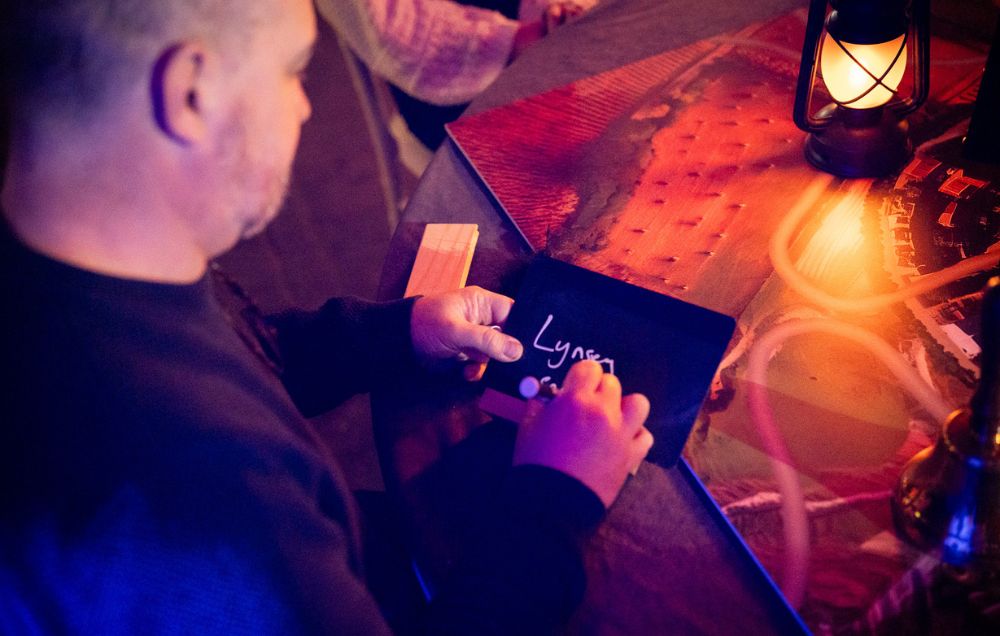
Bring everyone back together. Give the group five to ten minutes to discuss who behaved suspiciously, then vote, either by show of hands or by writing a name on paper. The player with the most votes is banished. They reveal their role, which keeps the tension high for the next round.
Reveal and debrief
Repeat missions and votes until the Traitors are found or only a few players remain. Then reveal roles and spend ten minutes talking it through. The debrief is where the team building happens: what did people notice, who surprised you, and how did the group decide whom to trust?
Mission ideas for adults at work
Good missions are quick and need almost no setup:
- Sabotaged puzzle. Each team assembles a jigsaw or builds a paper tower. A Traitor on the team has a secret instruction to slow them down without being caught.
- Information relay. Teams pass a message down a line. One Traitor is told to alter a detail.
If you want more formats to mix in, our team building page covers the range of activities we run.
Running it remotely or hybrid
An online Traitors team building game is possible with a video call and a private messaging tool. The host messages each player their role, Traitors chat in a private channel, and the round table is a group call with a poll for the vote. Missions need to be digital, such as a shared document puzzle or a scavenger hunt for items at home. Keep rounds short and use breakout rooms for missions.
What goes wrong and how to avoid it
- Eliminated players go idle. The biggest problem in any elimination game. Give banished players a job, such as running the vote count, acting as “ghost” observers or setting the next mission, so nobody sits out for half an hour.
- Trust fallout. Some people take being accused personally. Set the tone at the start: it is a game, bluffing is the point, and you will debrief at the end.
- Hierarchy gets in the way. If a senior leader is a Traitor (or is accused), junior colleagues may freeze. Consider having senior people join as hosts or observers rather than players, or mixing teams across levels.
- Quiet people get steamrollered. Loud voices dominate round table discussions. Use a timer and give everyone a turn to speak or vote in writing.
- Accessibility and inclusion. Check that missions do not rely on physical ability, and that the format works for neurodivergent colleagues, who may find bluffing or fast social cues difficult. Confirm any needs with your supplier or in advance with the team. Keep it alcohol-free by default so non-drinkers are not left out.
DIY or hosted?
Running it yourself is realistic for a small group, with a confident host and a quiet room. A hosted version earns its cost when the group is large, the space is awkward, or you want to play yourself.
| DIY | Hosted | |
|---|---|---|
| Effort for you | Plan missions, make props, host on the day | Brief the supplier and turn up |
| Group size | Best for a dozen or so people | Adapts to the space and group size |
| Hosting | You or a colleague, who cannot play | Professional presenter |
| AV and setup | Your own screen and room | Provided |
| Best for | Small teams, informal sessions | Away days, conferences, larger groups |
The Betrayers by Gold Tier Events
If you would rather play than organise, The Betrayers is our Traitors-inspired team building format. It is adapted to the space and group size, from boardroom to conference hall, and comes with a professional presenter and all AV included.

It sits within our wider team building offer.
FAQs
Can you go and play Traitors?
You cannot join the TV show unless you are cast on it, but the format adapts well to a work group. You can run a simplified version yourself with secret roles, team missions and a vote, or book a hosted version such as The Betrayers, which a professional presenter adapts to your space and group size.
What is the game format of Traitors?
Players are secretly split into Faithfuls and Traitors. Everyone completes missions, then meets at a round table to discuss who they suspect and vote one player out. The Traitors try to stay hidden and the Faithfuls try to find them. In an office version, the “murder” step is usually replaced with a quieter elimination.
How do you play the Traitors game at home?
Hand out secret role cards, with a few Traitors among the Faithfuls. Run a short mission, then hold a discussion and a vote to banish one player. Repeat for several rounds until the Traitors are all found or only a few players remain. At work, the same steps apply, with shorter rounds and a debrief at the end.
What are some fun team building activities?
Good options include escape rooms, quizzes, treasure hunts, game shows and social-deduction games like Traitors. The best choice depends on group size, space and how much energy the team has. Our team building page covers the options we run.
Tell us about your event and we’ll put together a tailored proposal. Enquire here and we’ll reply within one business day.